
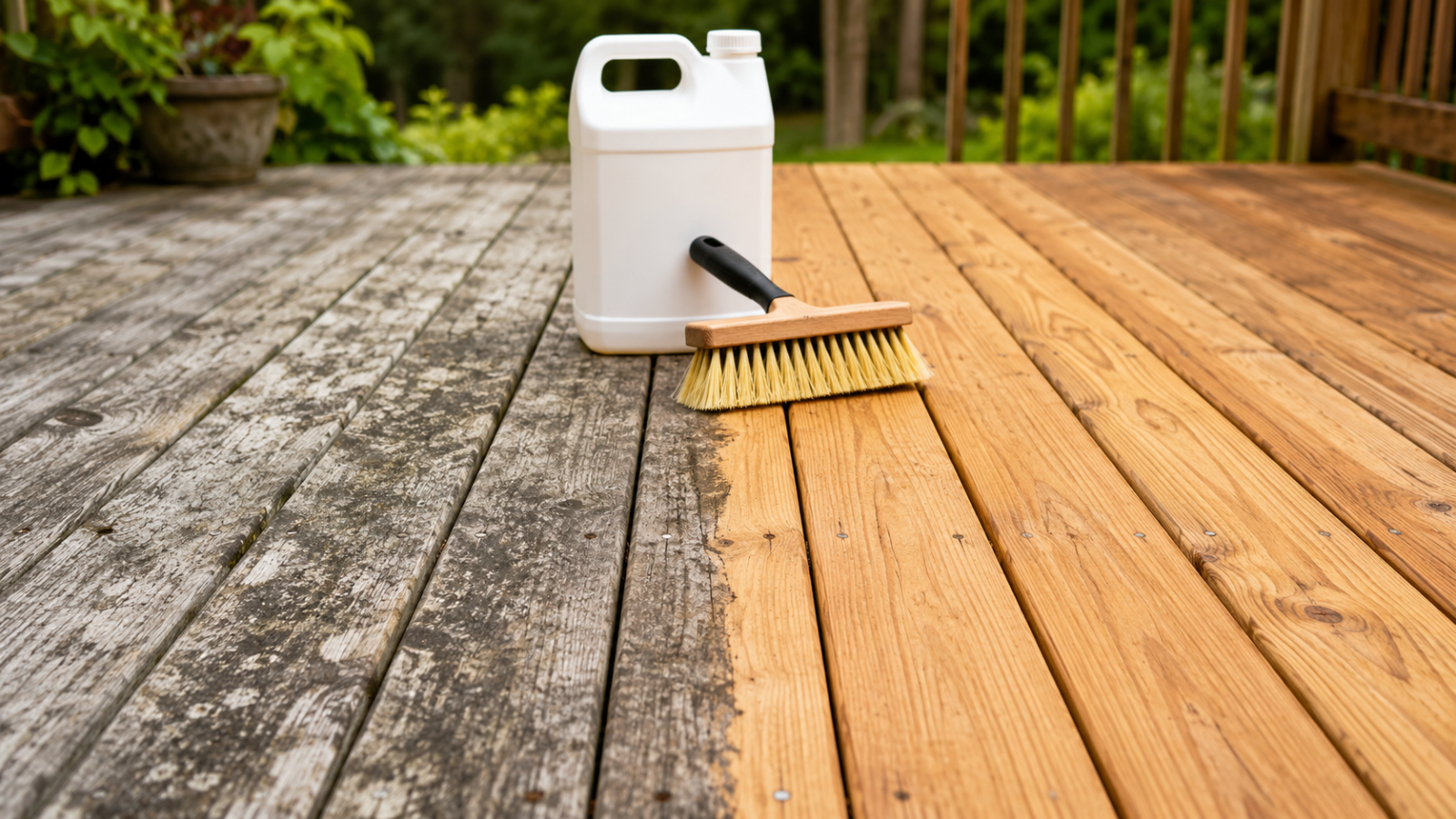
A wood deck takes a beating. Sun, rain, foot traffic, and mildew all work on the boards, and after a couple of seasons even a well-built deck turns gray and grimy. A deck cleaner is what brings the wood back. It’s a product made to lift the dirt, mildew, weathered gray fiber, and old finish off the surface so you’re left with clean, sound wood underneath. People reach for one in two situations: to freshen up a deck that’s looking rough, or to prep the wood before staining or re-staining.
That second situation is where the choice of cleaner really counts. Cleaning a deck before you stain it isn’t a cosmetic step you can rush. It’s what decides whether the stain soaks in and holds or peels off a season later. So if you’re getting ready to stain, restore, or maintain a wood deck, the cleaner you pick matters more than the price tag or the label suggests.
So the best deck cleaner for your project depends on two things: what’s currently on the wood, and what the cleaner’s active ingredients actually do to it at a cellular level. A gray, bare deck needs a different chemistry than a deck with peeling stain on it. And most of the cleaners you’ll find at the hardware store are doing far less than you think.
At Woodrich Brand, we’ve been formulating wood cleaners and strippers since the 1990s, when our founder Russell Cissell was running a wood restoration contracting company and couldn’t get consistent results from the commercial products available at the time. More than 26 years later, those field-tested formulas are still the backbone of our cleaning line. The single biggest takeaway from all that work is this: the cleaner you choose determines how well your stain performs afterward. A great stain applied over a poorly cleaned surface will fail early. A properly cleaned surface will make almost any decent stain look and perform better.
This guide covers the chemistry behind different deck cleaners, how to match the right cleaner to your deck’s specific condition, and the common mistakes that lead to poor results.
Why the Cleaning Step Makes or Breaks Your Stain Job
Most homeowners think of deck cleaning as a standalone chore. Spray something on, rinse it off, done. But if you’re planning to stain or re-stain your deck, the cleaning step is the most important part of the entire project.
A deck stain can only soak into and bond with clean, sound wood. Old dirt, loose gray fibers, alkaline residue, or leftover finish sitting on the surface will block penetration and cause uneven color. For oil-based penetrating stains, this matters even more. The oil needs to soak deep into the wood grain. If dead fiber is sitting on the surface, the stain sits on top instead of soaking in, and you end up with a finish that wears off in months rather than years.
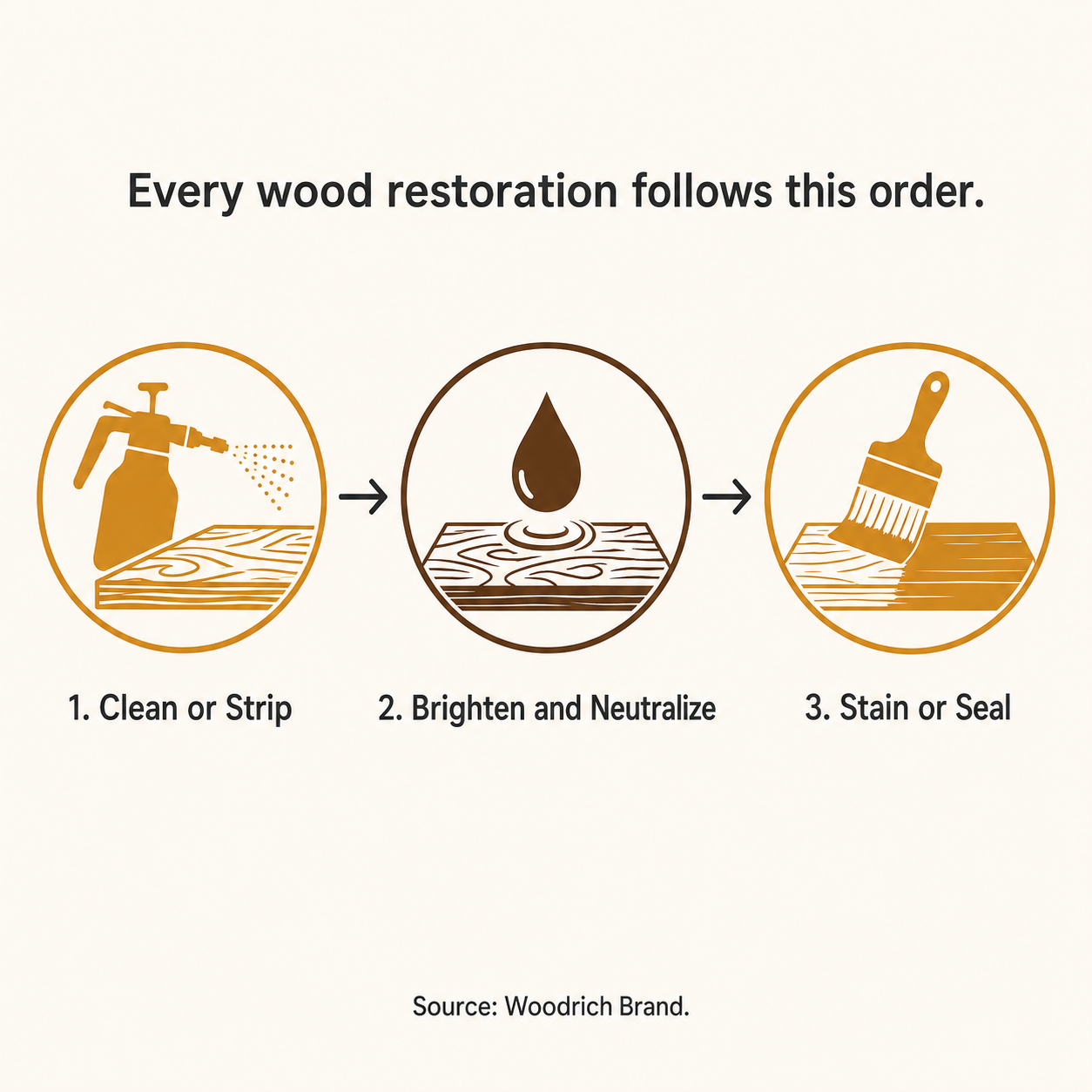
The other factor most people miss is pH. Wood is naturally slightly acidic. Many cleaners, especially bleach-based and alkaline formulas, shift the wood’s surface pH into a range where stain doesn’t bond properly. That’s why using a brightener/neutralizer after cleaning is a required step, not optional. It brings the wood’s pH back to its natural state so the stain can penetrate and cure the way it’s supposed to.
If you’re wondering whether you even need to clean before staining, the answer is almost always yes. We cover this in detail in our article on whether you need to use a deck cleaner before staining.
Deck Cleaner Chemistry: What’s Actually in the Bottle
Not all deck cleaners work the same way. The active ingredient determines what the cleaner can and can’t do to the wood. Here’s what you need to know about each type.
Oxygen Bleach (Sodium Percarbonate)
Sodium percarbonate is the active ingredient in most oxygen-bleach deck cleaners. When mixed with water, it releases hydrogen peroxide, which oxidizes gray weathered fibers, kills surface mold and mildew, and lifts dirt without attacking the wood’s structural fibers.
The biggest advantage of percarbonate-based cleaners is that they clean without being destructive. They break down into water, oxygen, and soda ash, leaving no harmful residues on the wood or in the surrounding environment. Percarbonate is also more effective than chlorine bleach at attacking deeper-rooted organic growth on wood, according to research published by the USDA Forest Products Laboratory, while remaining fully biodegradable.
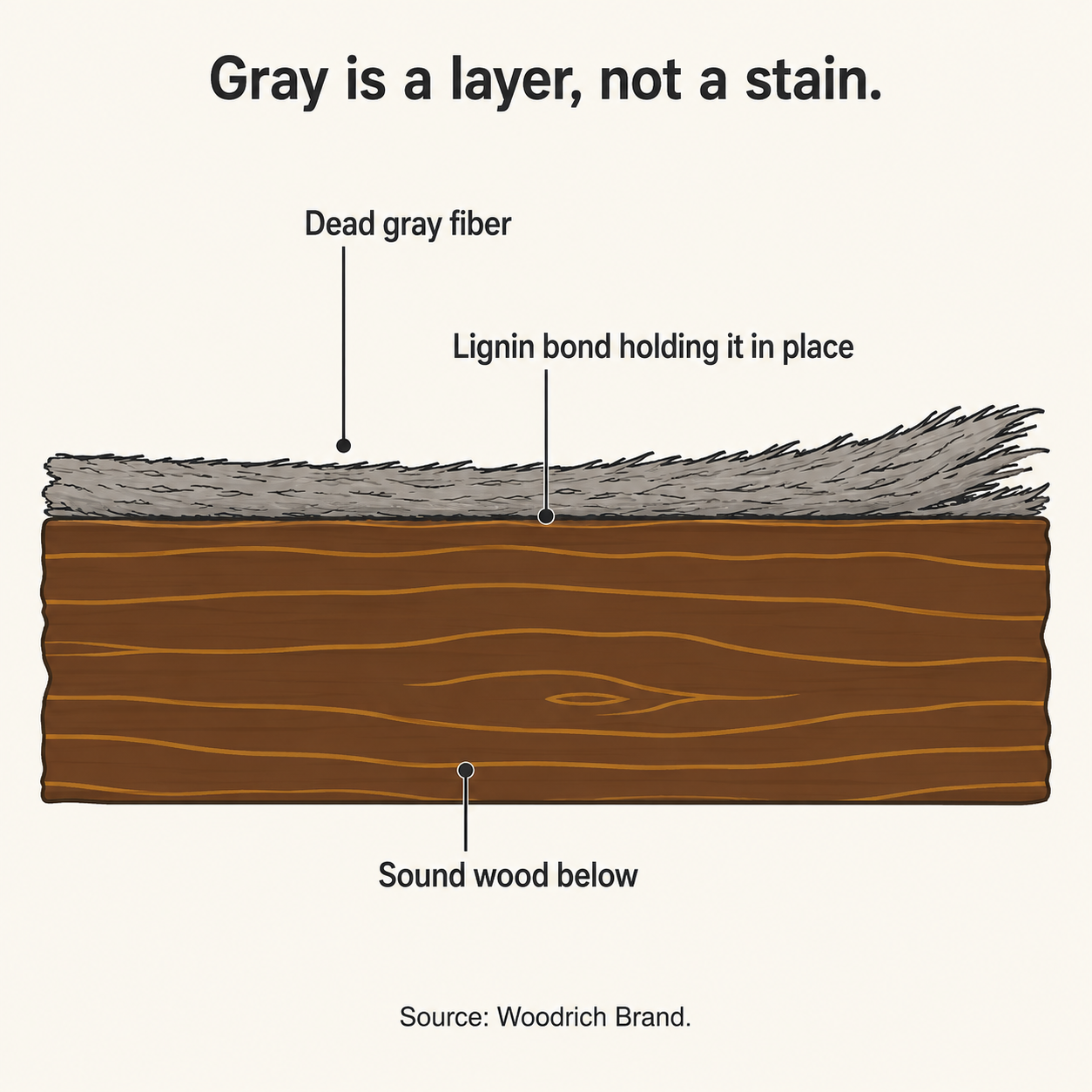
Our EFC-38 Wood Cleaner is a percarbonate-based formula, but it goes a step further than a standard oxygen-bleach cleaner. It’s formulated to release the lignin that binds dead gray wood fibers to the surface, so those fibers can actually be removed during rinsing rather than just bleached in place. That distinction matters. Nine out of ten deck cleaners on the market are essentially bleach and water. They change the color of the dead fibers, but the fibers are still sitting on the surface affecting how the wood takes stain.
Chlorine Bleach (Sodium Hypochlorite)
Chlorine bleach (the same active ingredient in household Clorox) is a strong oxidizer that kills surface mold on contact. But it does serious damage to wood in the process.
Sodium hypochlorite breaks down lignin, the natural polymer that holds wood cells together. That weakens the wood’s cellular structure and raises the grain, leaving a fuzzy, rough surface and an unnatural whitewashed appearance that’s difficult to correct.
Chlorine bleach is also strongly alkaline (pH around 13), which pushes the wood far outside its natural pH range. And despite its reputation as a disinfectant, bleach doesn’t eliminate mold spores at the root level. It kills surface growth but leaves the deeper-rooted spores intact. That’s why mold often returns within weeks after a bleach wash.
It will also corrode metal fasteners and hardware on your deck. If your deck screws or nail heads are already showing signs of rust, a bleach-based cleaner will speed that up.
Caustic Strippers (Sodium Hydroxide)
When a deck has a heavy, failing finish (peeling paint, cracking solid stain, lifting polyurethane), a regular cleaner won’t get the job done. You need a caustic stripper.
Sodium hydroxide (lye) is the active ingredient in most heavy-duty strippers. It works by saponifying and dissolving old oil-based finishes, polyurethane, varnish, and paint. This is the chemistry you reach for when there are layers of old product that need to come off entirely before the wood can be restained.
The trade-off is that caustic strippers are aggressive. They raise wood pH sharply, lift wood fibers, and require proper PPE (gloves, rain suit, eye protection). After stripping, the wood must be neutralized with an acidic brightener to bring pH back down and smooth out the raised grain. Skip that neutralization step and you’ll leave the surface in a state where stain can’t bond properly.
Our HD-80 Heavy Duty Wood Stripper is a sodium hydroxide-based formula designed for exactly this situation. It’s biodegradable, water-based, and free from methylene chloride. It will remove solid-color stains, semi-transparent stains, sealers, polyurethane, varnish, and paint from brands including Behr, Cabot, Sikkens, Olympic, and others.
Brighteners and Neutralizers (Oxalic Acid and Citric Acid)
This is the step most homeowners skip, and it’s often the reason their stain job fails.
After cleaning with any alkaline product (percarbonate, bleach, or lye), the wood surface is left at a higher pH than its natural state. A brightener/neutralizer is an acidic solution that restores the wood to its natural pH, opens the pores for better stain penetration, and brightens the wood back to a fresh-cut appearance.
Oxalic acid is the more aggressive option. It excels at dissolving iron stains (the black streaks around nail heads and fasteners) and removing tannin discoloration common on cedar and redwood.
Citric acid is milder and works well for general brightening and pH correction after routine cleaning. Our Citralic Wood Brightener is a citric acid formula that pairs with both EFC-38 and HD-80. It neutralizes pH, brightens the wood, and opens the grain for stain absorption. It’s biodegradable and eco-safe.
The bottom line: if you cleaned your deck, you need to brighten it afterward. Every time.
Deck Cleaner Chemistry at a Glance
| Chemistry | Best For | How It Works | Limitation |
| Sodium Percarbonate (oxygen bleach) | Gray/weathered wood, mold, mildew, light cleaning | Releases H₂O₂ to oxidize gray fibers and kill mold. Biodegradable. | Won’t remove heavy or film-forming finishes |
| Sodium Hypochlorite (chlorine bleach) | Surface mold kill only | Strong oxidizer that kills surface mold | Damages lignin, whitewashes wood, doesn’t kill root mold, corrodes fasteners |
| Sodium Hydroxide (caustic stripper) | Peeling paint, failed finishes, heavy coatings | Dissolves old finishes through saponification | Requires PPE, raises pH sharply, must be neutralized afterward |
| Oxalic Acid (brightener) | Iron stains, tannin streaks, post-cleaning pH correction | Chelates iron, reduces tannin, lowers pH | Not a cleaner on its own; used after cleaning |
| Citric Acid (brightener) | General brightening, pH neutralization | Gentle acid that restores natural wood pH and opens pores | Less aggressive on heavy tannin/iron stains than oxalic |
How to Match the Cleaner to Your Deck’s Condition
Every deck falls into one of three conditions. Identifying which one you’re looking at tells you exactly which cleaner chemistry you need and what process to follow.
Gray, Unfinished Wood
The wood has no existing stain or finish, or the previous finish has completely worn away. The surface looks gray, dull, and weathered.
Use a percarbonate-based cleaner (like EFC-38) followed by a citric or oxalic acid brightener (like Citralic). Apply the cleaner with a pump sprayer, let it dwell on the surface, then pressure wash. After rinsing, apply the brightener, let it dwell for at least five minutes, and rinse again. Allow the wood to dry completely (typically 24 to 48 hours of dry weather) before staining.
This is the most common condition we see, and the percarbonate + brightener combination handles it well. The cleaner lifts the gray oxidation and kills mildew. The brightener brings the pH back down and opens the grain so stain can penetrate properly.
Weathered Oil-Based Stain
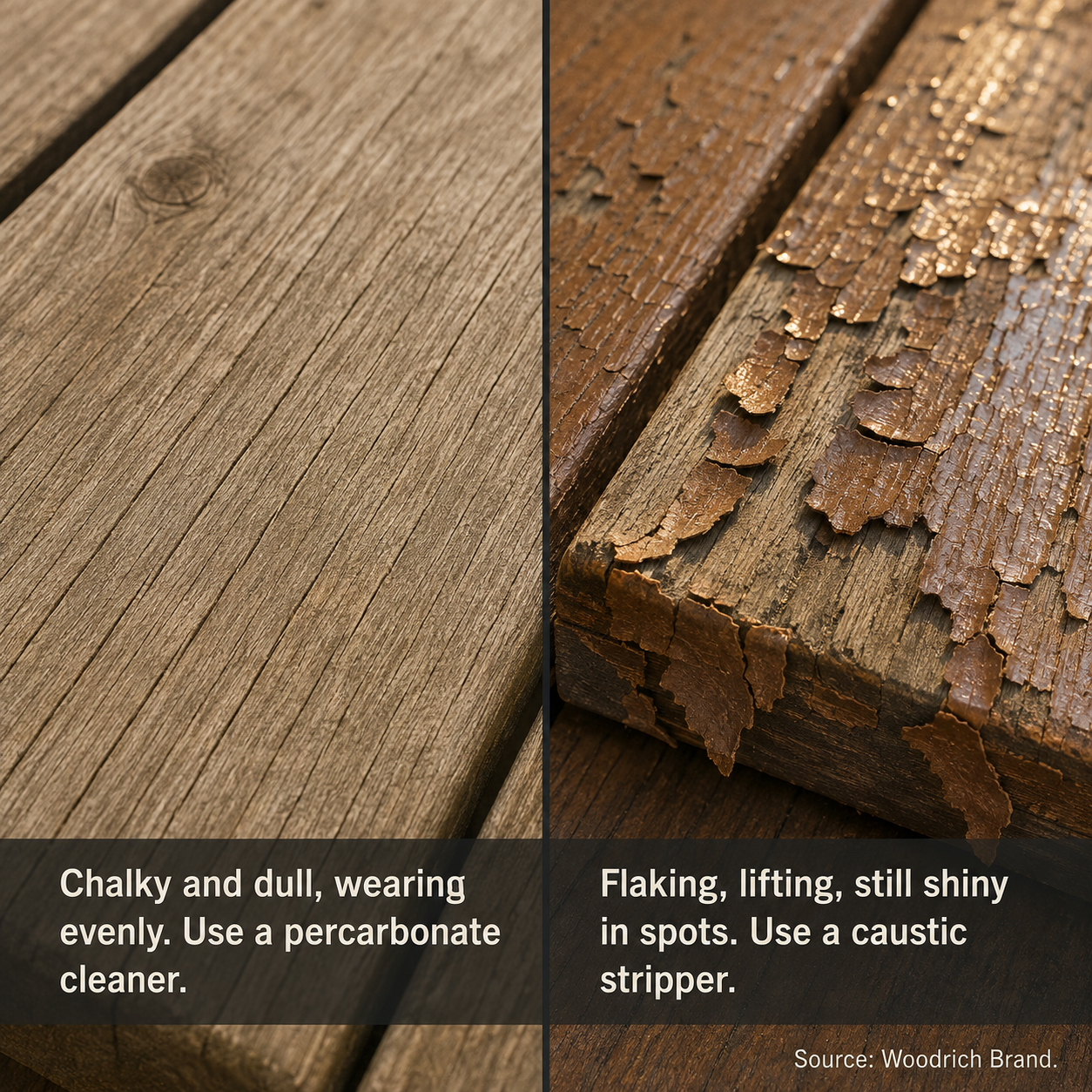
The existing finish looks chalky, dull, and is wearing away evenly. In areas of heavy foot traffic or sun exposure, bare wood may be visible and turning gray. There is no cracking, peeling, or shiny surface. The stain is just fading and thinning.
Use the same percarbonate cleaner + brightener combination as gray wood. The process is identical. EFC-38’s mild stripping action will help remove the remaining oil-based residue as part of the cleaning process, preparing the surface for fresh stain.
A common question here is whether you can use a deck cleaner on a stained deck. The answer depends on the finish type, but for a weathered oil-based stain that’s fading naturally, a percarbonate cleaner is the right call.
Cracking or Peeling Film-Forming Finish
The finish is cracking, peeling, or lifting at board edges. Some areas may still look intact and slightly shiny while others have failed completely. This uneven pattern of intact and failed finish is the hallmark of a film-forming product at end of life.
Use a caustic stripper (like HD-80) followed by a brightener. Apply the stripper in manageable sections (200 to 300 sq ft at a time), keep the surface wet, and allow 15 to 30 minutes of dwell time. Scratch-test a small spot with a stick. When the old finish has softened to a pudding-like consistency, pressure wash it off. After stripping, apply Citralic to neutralize the pH and brighten the wood.
This is the most labor-intensive of the three conditions, and it requires PPE (gloves, rain suit, eye protection). But there’s no shortcut. If you apply new stain over a failing film-forming finish, the new product will fail along with whatever’s underneath it.
Watch for hybrid products. Some stains marketed as oil-based actually behave like film-forming finishes when it comes to removal. If the finish on your deck is flaking, peeling, or still shiny in patches, treat it as a film-forming finish regardless of what the original product label said. The visual tells you more than the marketing.
The quick visual test:
- Chalky, dull, wearing away evenly = oil-based process (percarbonate cleaner)
- Flaking, peeling, or still shiny in spots = caustic stripper needed
Common Deck Cleaning Mistakes
Using Household Bleach as a Deck Cleaner
This is the most common mistake we see. A gallon of Clorox is cheap and familiar, but it’s one of the worst things you can put on a wood deck. Chlorine bleach breaks down the lignin that holds wood cells together, raises the grain, and leaves an unnatural whitewashed look. It doesn’t remove dead gray fibers. It just bleaches their color while leaving them in place. You end up with a surface that looks lighter but hasn’t actually been cleaned.
Bleach also doesn’t kill mold at the root. You’ll see the surface green growth disappear, but the spores deeper in the wood grain survive and regrow, often within weeks.
Using Vinegar or Dish Soap
DIY recipes floating around the internet suggest vinegar, dish soap, or baking soda as deck cleaners. These are not formulated for wood and create their own problems. Undiluted vinegar is acidic enough to leach hemicellulose from wood fibers, according to USDA Forest Products Laboratory research, weakening the wood itself. Dish soap can leave residues that interfere with stain adhesion.
For routine cleaning between stain applications, plain water or a very mild OxiClean solution is all you need. Save the real cleaners for when you’re prepping to stain.
Over-Pressure-Washing
A pressure washer is a useful tool, but only if you control it. Set too high, it will physically gouge and shred wood fibers, leaving permanent damage that no stain can fix. The Treated Wood Council recommends using a fan tip of at least 30 degrees and keeping pressure at or below 800 PSI. Keep the nozzle moving and maintain at least 12 inches of distance from the wood surface.
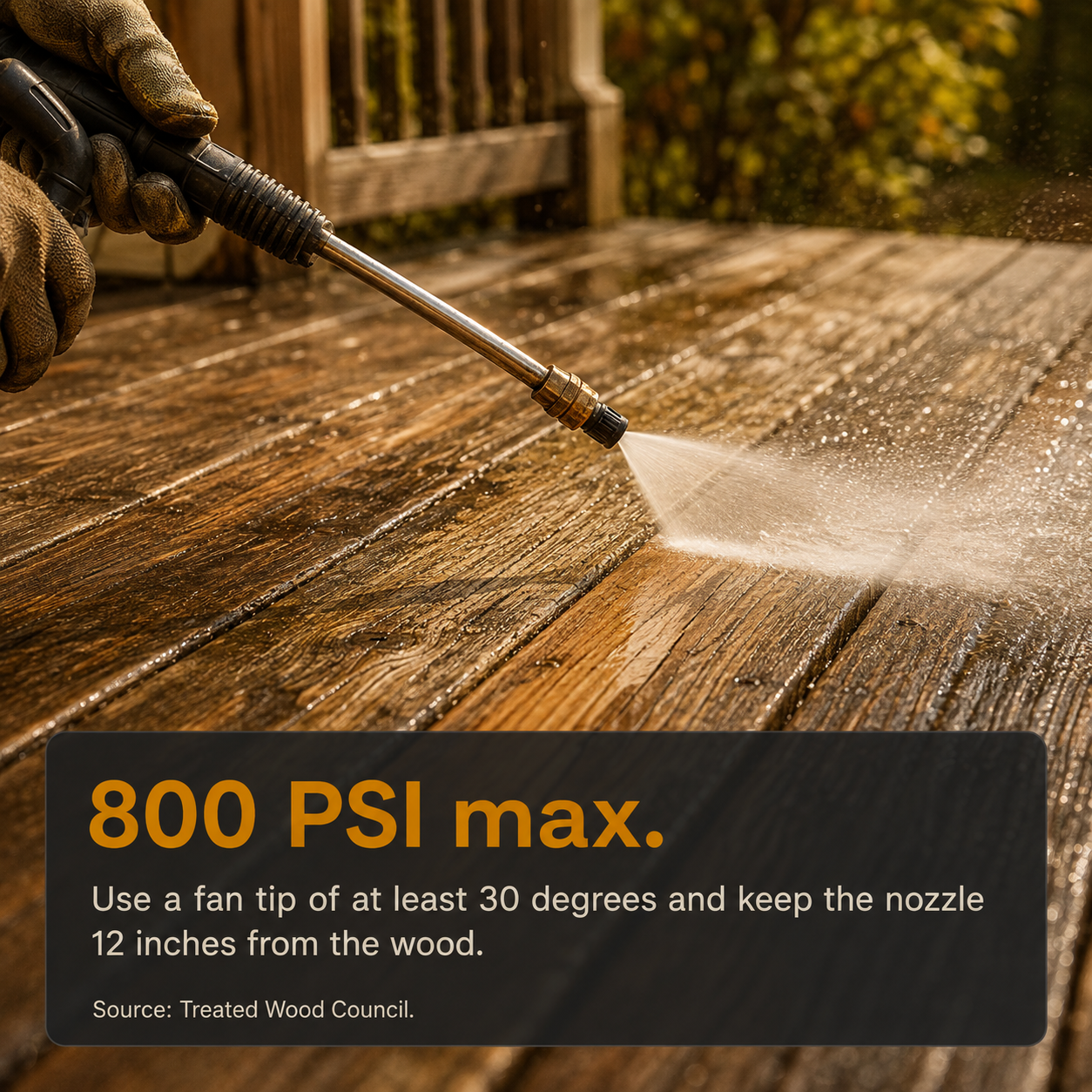
The pressure washer is there to rinse, not to do the cleaning. The cleaner chemistry does the work. The pressure washer washes it away.
Skipping the Brightener Step
After an alkaline wash, the wood surface sits at a pH where stain won’t bond and cure properly. A brightener/neutralizer brings the pH back to the wood’s natural range and opens the pores for stain penetration. Skipping this step is one of the top reasons stain jobs fail prematurely. It takes five to ten minutes and costs very little relative to the total project. There’s no good reason to skip it.
Not Protecting Your Surroundings
Deck cleaner runoff can damage landscaping, especially if you’re using a caustic stripper. Cover nearby plants and flower beds with plastic sheeting before you start. Direct rinse water away from desirable vegetation and storm drains. Percarbonate cleaners and citric brighteners are relatively gentle on plants when rinsed promptly, but it’s still smart to take precautions.
Concentrate vs. Ready-to-Use: Which Format Is Better?
When you’re shopping for deck cleaners, you’ll see two formats: powder concentrates and ready-to-use liquids.
| Factor | Powder Concentrate | Ready-to-Use Liquid |
| Cost per sq ft | Lower (more coverage per dollar) | Higher |
| Shelf life | Long (stable when kept dry) | Shorter (liquid H₂O₂ loses potency over time) |
| Mixing flexibility | Adjustable strength for light vs. heavy jobs | Fixed concentration |
| Convenience | Requires measuring and mixing | Ready to pour or spray |
| Storage | Compact and lightweight | Bulky |
For most deck projects, concentrates are the better value. You can mix lighter solutions for routine cleaning and stronger batches for heavy prep work. They store well between seasons, and you get significantly more coverage per dollar.
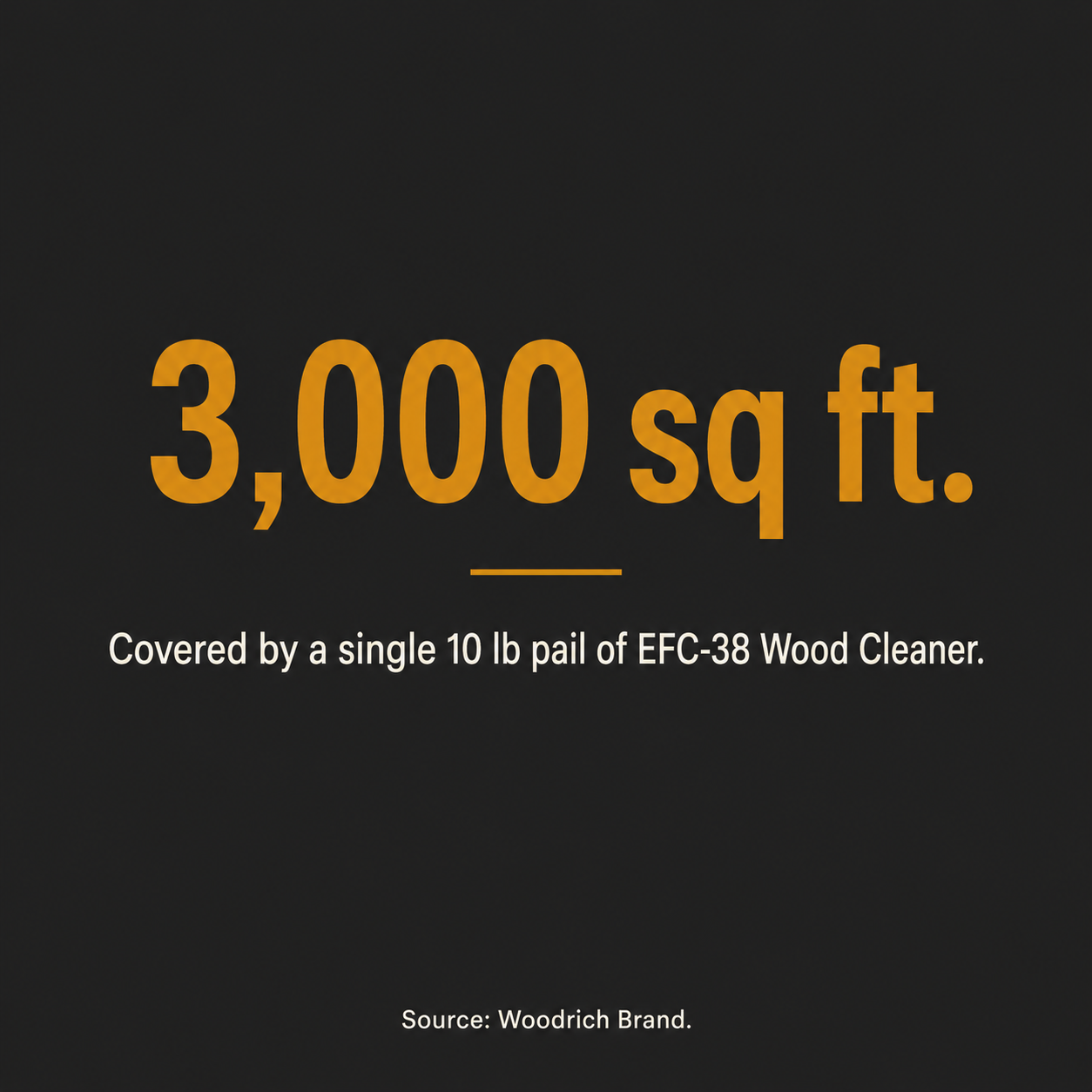
We sell our cleaners in powder concentrate form for exactly these reasons. A 10 lb pail of EFC-38 covers up to 3,000 square feet. A comparable volume of ready-to-use liquid product would cost more and cover less.
What to Look for on a Deck Cleaner Label
If you’re evaluating a cleaner at the store or online, check for these things:
- Active ingredient. This tells you the chemistry type and what the cleaner can actually do. If the label doesn’t list an active ingredient, that’s a red flag.
- Concentration. Is it a concentrate you mix yourself, or pre-diluted? Pre-diluted products are convenient but typically weaker and more expensive per square foot.
- Coverage rate. How many square feet does one container cover? This is the only honest way to compare cost between products.
- pH. Some labels list pH or describe the product as alkaline, neutral, or acidic. You want the wood to end up at a near-neutral pH before staining. If the cleaner is strongly alkaline, plan on a brightener step afterward.
- Environmental claims. Look for biodegradable, pet-safe, and plant-safe callouts if you have landscaping, pets, or water features near the deck.
- What it won’t do. A cleaner that says it removes mold and dirt probably won’t strip a solid stain. A stripper that removes heavy finishes probably requires PPE and a neutralizer. Read the limitations as carefully as the promises.
Not Sure Which Cleaner You Need?
If you’re standing on your deck right now trying to figure out what you’re dealing with, text a photo of your wood to our Project Support Hotline at (636) 288-8512. Russell Cissell, our founder and the person who formulated every product in our line, personally handles technical support. He can look at your wood, tell you what condition it’s in, and recommend exactly what you need.
You can also grab a Wood Cleaner Stripper Sample Kit for $10, which includes samples of EFC-38, HD-80, and Citralic. Each sample covers about 9 square feet. It’s enough to test on a section of your deck and see how the wood responds before committing to a full order.
For a complete cleaning and brightening setup, our Wood Cleaning and Brightening Kit pairs EFC-38 and Citralic in matched quantities so you have everything you need for a proper two-step prep.