
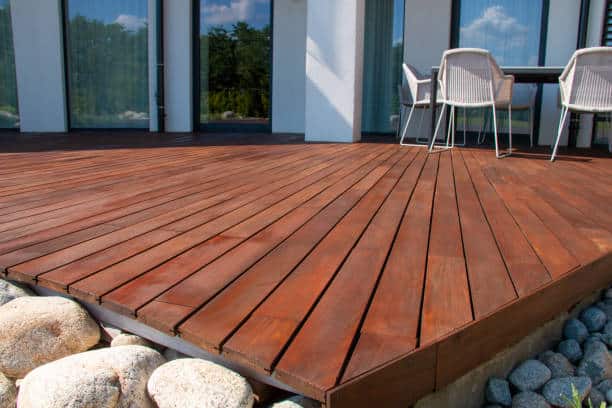
Timing your staining project right can make all the difference between a flawless finish and a frustrating do-over. Whether you’re working on a new fence or refreshing your deck, factors like temperature, humidity, and sunlight determine how well the stain bonds and how long it lasts.
In this guide, Woodrich Brand explains the ideal time of year to stain your wood surfaces, how to handle seasonal challenges, and what to consider before applying your first coat.
When Is the Best Time to Stain a Fence or Deck?
The best time to stain your fence or deck is typically in late spring or early fall, when temperatures are moderate and humidity is low. During these periods, the weather is warm enough for the stain to penetrate properly but not so hot that it dries too quickly.
The ideal conditions are:
– Temperature: Between 60°F and 90°F (16°C–32°C)
– Humidity: Dry, stable conditions for even drying
– Weather: Overcast or lightly sunny, with no rain forecast for at least 24–48 hours
These conditions allow the wood fibers to absorb the stain evenly, resulting in a smoother finish and better long-term protection against moisture and UV rays.
Woodrich Brand oil-based stains can still be applied in cooler weather, but drying time increases as temperatures drop. For optimal results, aim for mild, dry days whenever possible.
Can You Stain or Paint a Deck in the Winter?
Technically, yes—but it depends on the product. Cold weather can slow stain penetration and curing, especially when the temperature drops below 50°F (10°C). Moisture from frost or snow can also interfere with adhesion and cause uneven color.
However, Woodrich Brand Timber Oil Deep Penetrating Stain can be applied in temperatures as low as 40°F or below, though it will cure more slowly. By contrast, Woodrich Brand Hardwood Wiping Stain must be applied above 60°F and will only cure when temperatures remain above that threshold.
If you must stain during winter, pick a mild, dry day and confirm that both the air and wood surface are within the manufacturer’s recommended range. Avoid freezing conditions and ensure the surface is free of frost or condensation.
What About Summer? Can It Ever Be Too Hot to Stain?
Absolutely. While summer may seem ideal for outdoor projects, excessive heat or direct sunlight can cause problems. When the surface is too hot to touch, the stain may dry before it has time to soak in, leading to lap marks, blotches, or uneven coverage.
If you’re staining in summer:
– Work in the early morning or late afternoon when the sun is less intense.
– Choose shaded areas to prevent surface overheating.
– Avoid staining during heat waves or windy conditions that accelerate drying.
By controlling exposure to heat and sunlight, you’ll ensure the stain penetrates properly and leaves an even, natural finish.
How Long Should You Wait Before Staining a New Fence or Deck?
For newly installed wood, patience pays off. Fresh lumber often contains high moisture content or mill glaze—a smooth, sealed layer formed during manufacturing that can block stain absorption.
The general rule is to wait:
– 1–3 months for pressure-treated lumber
– 1–2 months for kiln-dried wood
– Until the wood’s moisture content is below 15%
To test readiness, sprinkle a few drops of water on the surface. If it beads up, the wood is still too wet. If it absorbs within seconds, the wood is ready for finishing.
Before staining, always clean and brighten the surface using Woodrich Brand EFC-38 Wood Cleaner and Woodrich Brand Citralic Brightener/Neutralizer. This ensures the wood is open, neutralized, and ready for even stain absorption.
How Do Temperature and Humidity Affect Stain Drying Time?
Temperature and humidity directly influence how your stain performs:
– Cool, damp conditions slow drying and can cause sticky or uneven results.
– Hot, dry conditions cause the stain to dry too quickly for full penetration.
– Stable, moderate conditions allow oils and pigments to bond evenly with the wood fibers.
If you’re using a Woodrich Brand oil-based stain, aim to apply it on a mild day with consistent weather for at least 48 hours. Avoid rain or heavy dew during that window to ensure the finish cures properly.
Woodrich Brand stains can also be applied to slightly damp wood, making them more forgiving when weather conditions change unexpectedly.

Protect Your Wood When the Time Is Right
The secret to a beautiful, long-lasting finish isn’t just the stain you choose—it’s when and how you apply it. By waiting for the right weather conditions and following proper preparation steps, you’ll achieve deeper color, better penetration, and protection that lasts for years.
For best results, use Woodrich Brand Timber Oil Deep Penetrating Stain for softwoods and Woodrich Brand Hardwood Wiping Stain for dense hardwoods. Both are formulated with low-VOC, penetrating oils that won’t peel, crack, or trap moisture—delivering natural beauty that endures season after season.
FAQ
Q1: What is the best temperature for staining a deck or fence?
Between 60°F and 90°F with dry, stable weather. Woodrich Timber Oil can also be applied in temperatures as low as 40°F, while Hardwood Wiping Stain requires 60°F or higher to cure.
Q2: Can I stain my deck in cold weather?
Yes. Woodrich Timber Oil can be applied in cold weather, though it will cure slowly. Always ensure the surface is clean and dry before applying.
Q3: Is it okay to stain slightly damp wood?
Yes. Both Woodrich Timber Oil and Hardwood Wiping Stain can be applied to damp wood for added convenience when weather conditions change.
Q4: How long should new wood dry before staining?
Wait 1–3 months for pressure-treated lumber or 1–2 months for kiln-dried wood, and always confirm moisture content below 15%.
Q5: Do I need to clean the wood before staining?
Absolutely. Clean with EFC-38 and brighten with Citralic Brightener/Neutralizer before staining to ensure optimal color and adhesion.
- Written by: Mary Cissell
- Revised by: Russell Cissell