
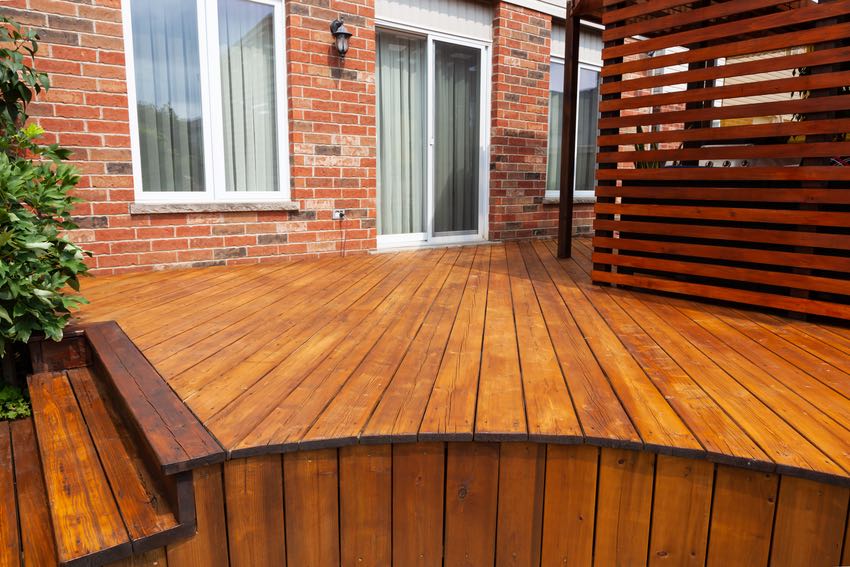
Choosing the best deck stain for lasting color and protection comes down to one decision: oil-based penetrating stains versus film-forming stains. Penetrating oil stains soak into the wood and wear gradually without cracking or peeling. Film-forming stains sit on the surface and eventually fail in ways that require stripping before recoating.
At Woodrich Brand, we’ve spent more than 30 years formulating and field-testing wood stains on cedar homes, decks, fences, and exotic hardwoods. Our flagship product, Timber Oil, is a deep-penetrating oil stain guaranteed not to crack or peel. It costs roughly $0.12 to $0.14 per square foot, and the antifungal package has been tested against more than 250 known sources of mold and mildew.
In this guide, we’ll walk through the three main types of deck stains, compare well-known brands like TWP, Ready Seal, Olympic, Defy, and Superdeck against Woodrich Brand, and help you choose the right finish based on wood species, climate, and how much maintenance you want to deal with long-term.
Before choosing a product, get clear on the look you’re after. Not all deck stain brands or stain types deliver the same visual or long-term performance.
Table of Contents
ToggleTypes of Deck Stains: Which Will Last the Longest?
There are three primary deck stain categories. Each offers a different balance of color, grain visibility, durability, and maintenance requirements.
Transparent Deck Stains
Transparent deck stains are widely considered the highest-quality long-term finishes when made with transparent metal oxide pigments. These pigments provide excellent UV protection while allowing full visibility of the wood grain.
This stain type is often chosen by homeowners seeking the longest lasting deck sealer that is easy to maintain over time.
Key benefits:
- Superior long-term UV resistance
- Preserves natural grain and texture
- Wears gradually without cracking or peeling
- Available in natural tones ranging from light golds to deep browns
Transparent oil-based stains are ideal for cedar, redwood, pressure-treated pine, and many hardwood decks when proper preparation is followed.
Semi-Transparent Deck Stains
Semi-transparent stains combine transparent pigments with clay-based fillers. While they allow some grain to show through, the finish can appear cloudy or uneven if absorption varies across boards.
Characteristics:
- Adds noticeable color while partially showing grain
- Widely available at retail stores
- Broader color selection than transparent stains
- Requires careful application to avoid lap marks
These stains can perform well but often require more attention during application and maintenance.
Solid Deck Stains
Solid deck stains function more like paint than stain. They completely hide wood grain and provide uniform color coverage.
Advantages:
- Maximum color coverage
- Excellent UV blocking
- Can conceal surface flaws on aging decks
Drawbacks:
- Prone to cracking and peeling
- Traps moisture if applied improperly
- Requires stripping before reapplication
Solid stains work best on decks where uniform color matters more than easy maintenance down the road.
Head-to-Head Comparison: Top Deck Stain Brands
When comparing top products, durability, ease of maintenance, and color retention matter most.
| Brand | Type Options | Pros | Cons |
| TWP Deck Stain | Semi and transparent | Excellent water resistance, natural wood tones | Limited color palette |
| Ready Seal | Transparent | No primer needed, forgiving application | Takes longer to dry, can fade quickly |
| Olympic | Semi & solid options | Available at major retailers, affordable | Can peel if surface isn’t prepared well |
| Defy Wood Stain | Water-based semi-trans | Great color retention, eco-friendly | Requires clean, dry wood |
| Superdeck | Semi & solid options | High durability, deep color | May need two coats for best results |
| Woodrich Brand | Transparent (Timber Oil) | Guaranteed not to crack or peel; oil-based penetrating formula recoats without stripping; direct project support from the founder | Not available in physical retail stores |
There are trade-offs with all products, so consider your type of wood, prep time, and finish you want when making your choice.
Best Deck Stain for Wood Type
Choosing the best deck stain depends heavily on the species of wood.
Cedar Performs best with transparent or semi-transparent oil-based stains that allow expansion and contraction. Avoid water-based or solid finishes, which tend to peel.
Redwood Highly compatible with deep-penetrating oil stains. Transparent finishes preserve grain detail and age gracefully.
Pressure-Treated Wood Requires a penetrating stain that can handle elevated moisture levels. Timber Oil-style formulas absorb evenly without blotching.
Ipe and Exotic Hardwoods Demand high-resin penetrating oils. Film-forming stains should never be used. Light application and wiping excess is critical.
Tips for Successful Deck Stain Application
Proper application is just as important as product selection.
- Clean the deck thoroughly and allow it to dry
- Never stain in direct hot sun or before rain within 24 hours
- Always test color on scrap wood or a hidden area
- Apply oil-based stains generously, then back-brush excess
- Stir semi-transparent and solid stains continuously
- Recoat based on wear and exposure, not calendar schedules
Maintenance and Touch-Ups
Even the longest lasting deck sealer requires periodic inspection.
- Water should bead or sheet off the surface
- If water absorbs, it’s time to recoat
- Clean decks regularly to remove pollen and organic debris
- Oil-based stains can often be reapplied without stripping
- Solid stains should be monitored for peeling near seams and railings
Realistic reapplication windows for an oil-based penetrating stain like Timber Oil work out to roughly 2 years on horizontal full-sun deck surfaces, 3 to 4 years on south-facing walls in full sun, and 4 to 5 years on fences. Vertical surfaces and shaded areas always last longer than horizontal full-sun surfaces.
Consistent light maintenance dramatically extends deck life and prevents costly full restorations.
Frequently Asked Questions
What is the most durable deck stain?
The most durable deck stains are oil-based penetrating stains made with transparent metal oxide pigments. They wear gradually without cracking or peeling, which makes them easier to maintain than film-forming finishes.
Is solid or semi-transparent deck stain better?
Semi-transparent stains preserve the wood grain and are easier to maintain over time. Solid stains offer the most uniform color but tend to crack and peel, and they require stripping before recoating.
Can you stain over an existing stain?
Yes, as long as the existing stain is not peeling or cracking. Oil-based penetrating stains are the easiest to recoat because they don’t require stripping. You only need to clean the wood and apply a fresh coat.
What stain is best for pressure-treated decks?
Oil-based penetrating stains are best for pressure-treated decks. They tolerate the higher moisture content typical of new pressure-treated lumber and absorb evenly without blotching.
Final Thoughts
The best deck stain and sealer is the one that matches your wood type, climate, and long-term maintenance expectations. While brands like TWP and Superdeck offer solid options, systems designed for deep penetration, gradual wear, and easy reapplication consistently deliver the best long-term results.
Preparation matters just as much as product choice. Clean, condition, and protect your wood properly to ensure your deck remains beautiful and structurally sound for years to come.
Get Started With the Right Stain for Your Project
If you’re not sure which color works for your deck, start with a Timber Oil sample color kit. For $15, you get a small bottle of every available color so you can test on your actual wood, in your actual lighting, before committing to a full order. The cost of the sample kit credits back toward your full purchase.
Have questions about your specific project? Text a photo of your deck to (636) 288-8512 and we’ll recommend the right products and quantities for your wood type and condition.