
Best Deck Stain for New Wood: How to Get It Right the First Time
-
Sale!
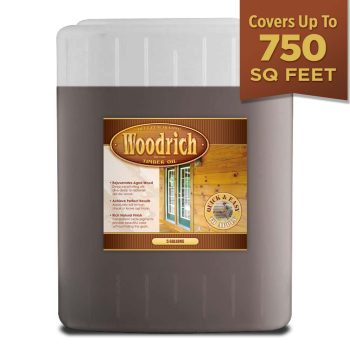
Woodrich Brand Timber Oil Deep Penetrating Wood Stain – Exterior Deck & Fence Stain (5 Gallons)
Rated 5.00 out of 5$233.00 – $269.00Price range: $233.00 through $269.00 Select options This product has multiple variants. The options may be chosen on the product page -
Sale!

Woodrich Timber Oil penetrating Wood Stain – Oil-Based Deck & Fence Stain (1 Gal.)
Rated 4.90 out of 5$50.00 – $59.00Price range: $50.00 through $59.00 Select options This product has multiple variants. The options may be chosen on the product page
- Best stain for new wood application
- Penetrates deep into wood
- Unaffected by moisture content
- Extremely easy to apply
- Trusted by contractors & professionals
- 1 Gallon of Timber Oil = 150 sqft
- 5 Gallons of Timber Oil = 750 sqft
- Round up so you don’t run out mid-project
Contact a project support specialist now at 636-288-8512
You can also email support at support@woodrichbrand.com
We can help you select the right stain color for your specific wood
Sample Color Kits are available Order Color Samples
You can visit our gallery or forum for tips, creative ideas, and support from the new Woodrich Brand community.
Most deck stains will tell you right on the label: do not apply to new wood. The reason is moisture. New lumber typically arrives with a high moisture content, and most stains can’t penetrate wet wood fibers properly. They may look fine going on, but once the wood dries and moves, the finish cracks and peels.
Timber Oil by Woodrich Brand is formulated differently. It penetrates deep into the wood even when moisture content is high, so you can stain a new deck, dock, fence, or siding without waiting for the wood to weather or dry out. At Woodrich, we’ve helped hundreds of homeowners and contractors get a lasting finish on new wood the right way, including new pressure-treated lumber, which presents its own challenges.
Why Moisture Content Is the Problem With Staining New Wood
Oil-based stains penetrate wood by displacing air in the wood’s cell structure. When those cells are partially occupied by water, stain molecules can’t get in. This is why most oil-based stains require wood to reach 12% moisture content or below before they’ll penetrate effectively.
New lumber arrives far wetter than that. According to the USDA Forest Products Laboratory, green wood moisture content can exceed 200% of the wood’s dry weight, depending on species and cut. Even kiln-dried softwood stamped KD-19, meaning it’s been dried to a maximum of 19% moisture content, still sits above the threshold most oil-based stains require.
Timber Oil is a paraffinic oil-based stain, which means it’s engineered for deeper penetration than conventional oil stains. It’s formulated to work even when moisture content is elevated, making it one of the few oil-based options that performs reliably on new wood without an extended waiting period.
How Long Should You Wait Before Staining New Wood?
For most oil-based stains, you’re waiting until the wood reaches 12% moisture content or below. How long that takes depends on your climate, the species, and how the wood was dried.
With Timber Oil, the window is more forgiving. For new, untreated wood that has had a few days to off-gas and acclimate, you can apply Timber Oil without waiting months. A simple field test: sprinkle a few drops of water on the surface. If it absorbs within a few seconds, the wood is ready. If it beads up, give it more time.
For a quantitative reading, a pin-type moisture meter works well, though keep in mind that surface readings don’t always reflect the moisture content throughout the board.
What About New Pressure-Treated Wood?
New pressure-treated lumber is a different situation. Modern PT lumber, treated with copper-based preservatives like MCA (micronized copper azole) or ACQ (alkaline copper quaternary), uses water as the carrier for the preservative. That means the boards arrive from the mill saturated, often at 45–100%+ moisture content.
Off-gassing from modern preservatives is not a meaningful concern for stain adhesion. The real barrier is simply excess water that needs time to dry out.
For new pressure-treated wood, Woodrich generally recommends waiting one to three months before staining and confirming with a moisture meter that the wood is below 15% moisture content. In hot, dry climates, that window can be as short as two to three weeks. In cool, humid conditions, it may take longer.
KDAT (Kiln-Dried After Treatment) lumber is the exception. Because it’s been re-dried after treatment, it’s ready for staining right away, no waiting required. The trade-off is cost: KDAT typically carries a 15–25% price premium and isn’t commonly stocked at big-box retailers.
How to Prep New Wood Before Staining
Even brand-new wood benefits from a light clean before staining. As pressure-treated wood dries, it can develop surface salt deposits from precipitated preservatives. These should be cleaned off so they don’t interfere with penetration.
The prep process for new wood:
- Clean the surface with EFC-38 Wood Cleaner to remove any surface residue, dirt, or mill glaze
- Follow with Citralic Wood Brightener to neutralize the surface and open the wood grain
- Allow 24–48 hours of dry weather for the wood to dry completely before applying stain
For new wood, a single application of Timber Oil is typically all that’s needed. New wood has less free space in its cell structure for the oil to occupy, so it absorbs less than older, weathered wood. On an older deck, the first application may soak in completely, leaving room for a second application to fully saturate the surface.
Does Timber Oil Work on Old or Weathered Wood Too?
Yes. Timber Oil is just as effective on older, weathered wood as it is on new wood.
One of the biggest advantages of an oil-based penetrating stain is how easy it is to maintain over time. When it’s time to reapply, typically every three to four years on a south-facing wall in full sun, four to five years on a fence, and around two years on a horizontal deck surface with full sun exposure, you just clean the surface and reapply Timber Oil. No stripping required.
This is a meaningful difference from film-forming water-based stains, which sit on the surface of the wood rather than penetrating it. When those finishes fail, they crack and peel, and removing them is a time-consuming process before you can refinish the wood. Because Timber Oil penetrates rather than films, it’s guaranteed not to crack or peel.
Coverage and Sizing
- 1 gallon of Timber Oil covers 150 sq ft
- 5 gallons of Timber Oil covers 750 sq ft
- Round up so you don’t run out mid-project
For new wood, plan on one application. If you’d like to try the colors on your actual wood before committing to a full order, sample color kits are available for $15, that cost is credited toward your next purchase.
Get Help Picking the Right Product
Not sure which stain is right for your wood species, or how much to order? Call or text the Woodrich Project Support Hotline at (636) 288-8512. You can send photos of your project and get a personalized recommendation on product, quantity, and color, from someone who’s done this for decades.
You can also browse real customer projects in the gallery to see how Timber Oil looks on different wood types before you buy.