
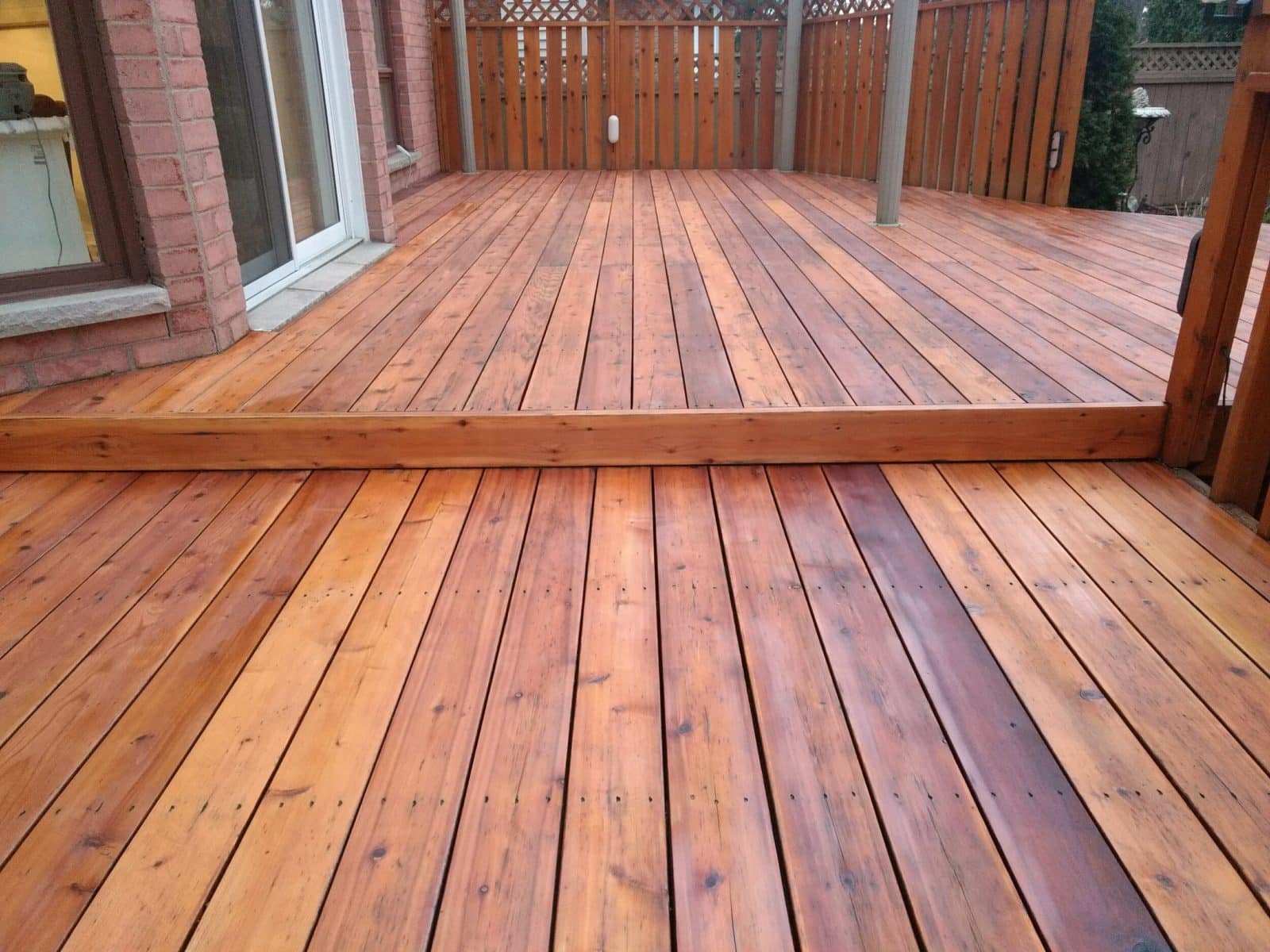
Can you stain pressure treated wood? Yes, but timing and prep make the difference between a solid finish and a peeling mess. If you stain too soon, the wood won’t absorb it. If you wait too long, the sun and moisture damage the surface. Here’s how to do it right.
What Is Pressure-Treated Wood?
Pressure-treated wood is outdoor-grade lumber soaked with preservatives to resist rot, insects, and mold. It’s made to last, especially for decks, fences, and posts. But right after treatment, it’s wet not from water, but from chemicals.
That moisture makes staining tricky. If the wood’s still damp, the stain can’t soak in. It just sits on the surface or slides right off. Staining pressure treated wood properly ensures long-lasting protection and enhances its natural beauty.
You’ll usually find pressure-treated lumber at big-box hardware stores, labeled for “ground contact” or “above ground” use. These boards are built tough but need proper care to look good over time. That starts with knowing what you’re working with and avoiding the mistake of rushing into staining without understanding how pressure-treated wood behaves.
Can I Stain Pressure-Treated Wood Immediately?
No. Staining too early means poor penetration, blotchy color, and wasted product. Even the best stains won’t help if the wood hasn’t dried.
Fresh from the mill, treated lumber contains a high level of moisture from the chemical preservatives used during manufacturing. Applying stain too soon prevents it from bonding correctly with the wood fibers. This can lead to peeling, streaking, or complete stain failure.
Instead of getting ahead of yourself, it’s better to wait and test. You’ll get longer-lasting protection, better appearance, and avoid having to redo the job. Rushing this step is one of the most common and avoidable deck staining mistakes.
How Long to Wait Before Staining
Most wood stains require 3 to 6 months for the pressure treated wood to reach a moisture content low enough for application. Woodrich Brand finishes are more moisture tolerant so you can apply them to the wood before it begins to turn grey.
Factors that affect drying time:
- Climate – Hot, dry areas dry faster than humid or coastal regions.
- Wood size – Thicker boards take longer.
- Location – Shaded areas stay damp longer.
Remember, drying time is not just about the surface. The core of the wood can hold moisture long after the outer layer seems dry. Decks in humid areas may take up to 6 months to reach a low moisture content. Always test before staining, guessing based on time alone can ruin your finish if you are working with a solid color or film forming product.
How to Tell if Your Wood Is Ready
1. The Water Drop Test
Pour a few drops of water on the wood.
- If the water beads up, it’s still wet.
- If it soaks in within 10 seconds, it’s ready.
2. Use a Moisture Meter
Look for a reading of 15% or lower.
Waiting longer is better than staining too soon. But don’t let it go more than a year, unprotected wood can warp, crack, or grow mildew.
What Type of Stain Works Best?
Go with a semi-transparent, oil-based stain. It soaks into the wood and highlights the natural grain. It also protects against water, sunlight, and mildew without peeling or flaking.
Water-based stains sit on the surface. They don’t hold up well on treated lumber that’s constantly exposed to the elements. Staining treated lumber at the right time helps prevent peeling and brings out the wood’s rich, natural tones.
Woodrich Brand oil-based stains are made for this. They penetrate deep, even in tough conditions, and give a natural, even finish.
Step-by-Step: How to Stain Pressure-Treated Wood
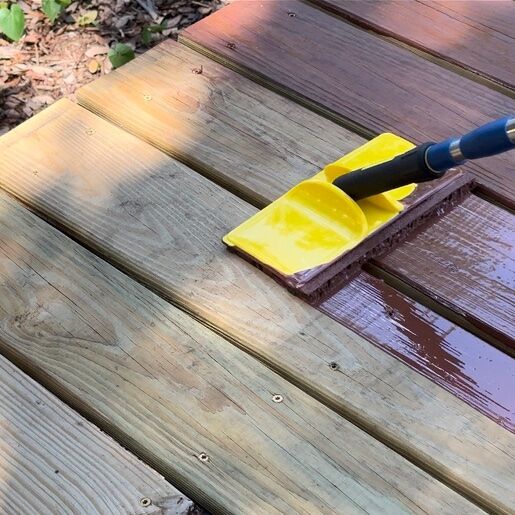
1. Clean the Surface
Even new wood gets dirty, dusty, or has mill glaze.
- Use a wood cleaner or brightener (Woodrich Brand makes one)
- Apply with a brush or sprayer
- Let it sit for 10–15 minutes
- Scrub with a stiff brush or rinse with a pressure washer
- Let dry for at least 24–48 hours
2. Sand If Needed
If the surface feels rough, lightly sand it with 60–80 grit paper. Focus on splintered spots or high-traffic areas.
3. Pick the Right Day
- Dry weather
- Temps between 50–85°F
- No rain in the forecast for 24–48 hours
- Avoid staining in direct sunlight, work in the shade or early morning
4. Stir the Stain
Don’t shake it, that adds bubbles. Stir slowly and often.
5. Apply the Stain
Use a brush, roller, or pump sprayer.
- Work in small sections
- Follow the grain
- Apply a thin, even coat
- Wipe up any puddles
- For darker color, apply a second coat after 24 hours
6. Let It Dry
Avoid foot traffic or furniture for at least 24–48 hours. Full curing may take up to 7 days.
How Often to Re-Stain
Reapply every 2 to 3 years, or when you see:
- Fading or dullness
- Water no longer beads up
- Visible cracks or drying
To make it last longer:
- Sweep debris regularly
- Clean annually with a mild soap or wood cleaner
- Avoid harsh power washing
Common Mistakes to Avoid
- Staining too soon – The stain won’t absorb
- Skipping prep – Dirt and mill glaze block penetration
- Using water-based stain – It won’t hold up on new treated wood
- Applying too much – Leads to sticky, uneven results
FAQs
Q: Can I stain pressure treated wood in the first month?
No. Even if it feels dry, the inside is still holding moisture. Always test before staining.
Q: What happens if I stain treated wood too early?
The stain may peel, fade quickly, or not stick at all. You’ll need to strip it and start over.
Q: Do I have to use a specific brand of stain?
You don’t have to, but choosing one made for outdoor wood (like Woodrich Brand) gives you better results, especially with treated lumber.
Q: How do I keep my deck looking good after staining?
Sweeping often. Clean with a deck cleaner once a year. Reapply stain every few years based on wear.
Summary
Can you stain pressure treated wood? Yes,but timing is everything. Wait until the wood is dry. Clean it well. Use a quality, oil-based stain. Follow the steps, and you’ll get a finish that looks great and lasts.For best results, use Woodrich Brand stains, specially formulated for pressure-treated wood to deliver deep, lasting protection without peeling or fading.