
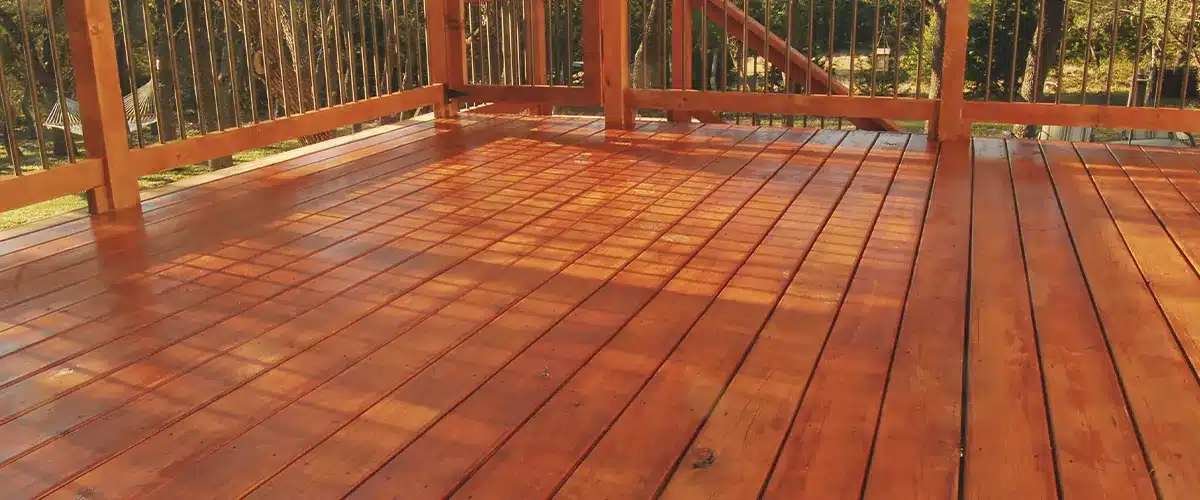
Every successful deck or wood project depends on timing—and few steps are more misunderstood than drying. Apply stain too early, and it won’t cure properly. Walk on it too soon, and you risk uneven patches or marks.
In this guide, Woodrich Brand explains how long wood stain actually takes to dry, what environmental and application factors affect the process, and how to tell when your finish is truly ready for use.
Table of Contents
ToggleHow Long Does It Take Wood Stain to Dry?
On average, oil-based stains like Woodrich Brand Timber Oil Deep Penetrating Stain or Hardwood Wiping Stain take 24–48 hours to dry under ideal outdoor conditions.
However, the actual time varies depending on:
-
Temperature: 60°F–80°F (15°C–27°C) is optimal for curing.
-
Humidity: Lower humidity speeds drying; high humidity traps solvents.
-
Wood type: Softwoods absorb faster; dense hardwoods slow down the process.
-
Application thickness: Thin, even coats dry faster and more uniformly.
-
Airflow: Good ventilation allows solvents to evaporate naturally.
General guideline:
-
Touch-dry: 4–8 hours
-
Foot traffic: After 24 hours
-
Fully cured: 48–72 hours
Even if the surface feels dry to the touch, deeper layers may still be curing—so patience pays off.
Why Oil-Based Stains Take Longer Than Water-Based
Oil-based products penetrate deep into the wood’s fibers, replacing internal moisture and forming a durable, flexible finish. This process takes more time than water-based products, which dry primarily through surface evaporation.
Advantages of slower-drying oil-based stains:
-
Deeper penetration for better protection.
-
Enhanced color richness and wood grain definition.
-
Longer open time, allowing easier blending and consistent results.
In short: they take longer to dry, but the result is stronger, more natural, and easier to maintain.
What Conditions Slow Down Drying?
Even the best stain won’t cure properly under the wrong conditions. Watch out for these common culprits:
-
Cool or damp weather: Moist air slows solvent evaporation and can cause tacky surfaces.
-
Over-application: Excess oil sitting on the surface prevents proper curing.
-
Poor airflow: Enclosed spaces or still air trap fumes and delay drying.
-
Direct sunlight: Can “flash-dry” the surface, preventing full penetration.
If drying seems slow, increase airflow gently or wait for drier conditions rather than trying to speed up the process with heat.
How Can You Tell When the Stain Is Fully Dry?
You can test for dryness in two simple ways:
-
Touch test: Lightly press a clean, dry cloth or finger against the surface.
-
If it feels tacky or leaves residue → needs more time.
-
If it feels dry and smooth → ready for light use.
-
-
Absorption check: Sprinkle a few drops of water on the surface.
-
If the water beads up → stain still curing.
-
If it darkens slightly and absorbs → fully cured and sealed.
-
Always err on the side of caution—waiting an extra day ensures full bonding and color stability.
What Happens If You Walk on or Recoat Too Soon?
Rushing the drying process can cause long-term problems:
-
Uneven sheen or gloss: Caused by trapped solvents under the surface.
-
Sticky or soft spots: From over-applied or undercured oil.
-
Reduced durability: Weakens the finish, leading to premature wear or water intrusion.
If you accidentally recoat or walk on a surface too soon, clean it lightly with Woodrich Brand Citralic Brightener & Neutralizer after full curing, then reapply a thin maintenance coat.
How to Create Ideal Drying Conditions
For best results, follow these best practices:
-
Check the weather.
Stain when temperatures are mild and no rain is expected for 48 hours. -
Work in the shade.
Avoid staining under direct sunlight or extreme heat. -
Apply thin, even coats.
Use a brush, pad, or roller for controlled application—never flood the surface. -
Wipe away excess.
After 30–60 minutes, remove unabsorbed stain to prevent sticky residue. -
Allow airflow.
Keep the area well-ventilated until fully cured.
By controlling your environment and technique, you’ll ensure even drying and deep, lasting protection.
Patience Equals Performance
Wood stain isn’t just about color—it’s a system that works over time. Allowing oil-based products like Woodrich Brand Timber Oil Deep Penetrating Stain or Hardwood Wiping Stain to cure naturally ensures long-term beauty and performance.
Let your deck or furniture dry completely before use, and you’ll enjoy the rewards: richer color, stronger protection, and years of lasting durability.
Written by: Russell Cissell
Revised by: Mary Cissell