
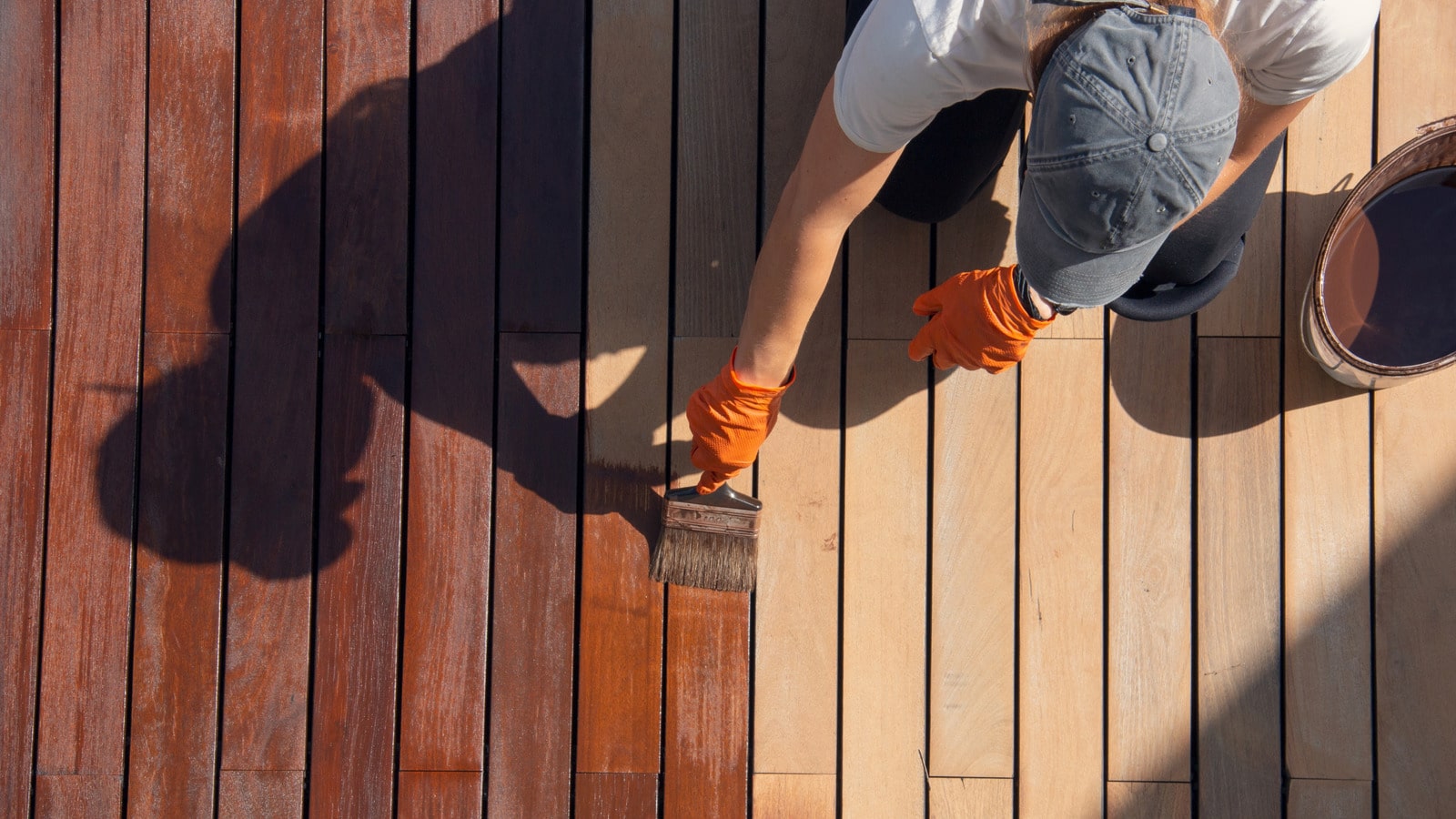
Choosing the right deck stain color is one of the most important decisions you’ll make for your outdoor space. The color you choose sets the mood of your backyard, affects how the wood ages, and determines how easy your deck will be to maintain over time.
With so many deck stain ideas available, it’s essential to understand how different stain types and wood species interact. This guide breaks down stain finishes, color choices by wood type, and practical tips to help you choose stains for decks that look great and last.
Deck Stain Colors and Why They Matter
Deck stain color does more than change appearance. It affects UV protection, maintenance cycles, and how natural the wood looks after application. The right color enhances grain and character, while the wrong one can hide beauty or fail prematurely.
Understanding how different stain types behave is the first step to making a smart choice.
Types of Deck Stain Finishes
Not all deck stains perform the same. The finish you choose directly impacts durability, appearance, and maintenance.

Solid Deck Stain Colors
Solid deck stain colors offer the widest range of tones, but they completely cover the natural grain of the wood. These stains behave more like paint, forming a surface film that is prone to cracking and peeling under sun exposure and foot traffic.
Once a solid stain begins to fail, it becomes one of the most difficult and expensive finishes to remove. Choosing a solid stain means committing to higher maintenance and future stripping.
Semi-Solid and Semi-Transparent Deck Stain Colors
These finishes sit somewhere between solid and transparent stains. They often rely on clay-based pigments, which can obscure grain while still allowing some texture to show through.
While they sound like a compromise, semi-solid and semi-transparent stains are more prone to lap marks, streaking, and uneven application. If technique isn’t perfect, flaws are noticeable. In many cases, these stains create more maintenance issues than they solve.
Transparent Toners
Transparent deck stains made with micro-ground transoxide pigments are in a category of their own. These pigments penetrate the wood while providing UV protection without hiding the grain.
Woodrich Brand Timber Oil and Hardwood Wiping Stain use only transparent oxide pigments, with no clay or fillers. The result is a clean, natural finish that enhances wood rather than covering it.
These stains are easy to maintain. When it’s time to recoat, there’s no stripping or sanding required—just a rinse and a light reapplication. This makes transparent toners one of the most sustainable and long-lasting stain options for decks.
Deck Stain Color for Cedar
Cedar is one of the most popular choices for decks, fences, and outdoor structures. It’s known for its rich, reddish-brown tones and pleasant aroma. But not all cedar is the same — some boards run dark, and others are closer to blond or yellow.
If you’re working with darker cedar wood, Warm Honey Gold often looks the most natural. It brings out the warmth in the wood without overpowering it. But if your cedar has more yellow or blond tones, Honey Gold can shift too far into orange territory. In that case, Brown Sugar is usually a safer choice. It delivers a warm finish without looking artificial.
If you’re going for a bolder look, Amaretto finishes with a bronzy red tone that really plays up the richness of cedar. And if you want a dark finish or plan to create a custom blend, Signature Brown is a strong base color. It can also be mixed with lighter tones to tone them down without going full dark.
The great thing about cedar is that it accepts stain evenly and looks good across a range of tones. That makes it one of the most forgiving and flexible species to work with — especially when testing cedar color deck stain options.
Deck Stain Color for Pine
Pine has a reputation for being tricky, but it’s still one of the most used decking materials, especially pressure-treated pine. Its natural tone is yellowish and a bit unpredictable from board to board. That yellow can clash with lighter stains, especially if you’re aiming for a soft or natural finish.
That’s why most people choose a darker deck stain when working with pine. The yellow undertones blend better with rich browns and deeper shades. Amaretto is a top choice because it brings a red-brown warmth that neutralizes the natural yellow of the wood. Pairing it with Signature Brown creates a customer favorite — a custom blend that balances richness and depth without feeling too dark.
Because pine is softer and more porous than cedar, it tends to absorb more stain. That’s actually an advantage when using a penetrating oil like Timber Oil. The finish soaks deep into the grain and gives you longer protection against weather and wear.
If you want to keep things simple, you can apply one color straight from the can. But for pine decks, a custom blend is often the best way to dial in the perfect tone among your decking stain colors.
Deck Stain Color for Ipe
Ipe is a tropical hardwood with dense, tight grain and a naturally rich color. When freshly cut and still damp, it has a deep reddish-brown tone that looks almost polished. The challenge is keeping that fresh-cut look over time. Most stains either sit on top and flake off or soak in too deep and disappear.
Amaretto was developed specifically for Ipe. It mimics the wet wood color without hiding the grain. Because Ipe is so dense, it doesn’t absorb stain like softwoods do. That’s why you need a formula designed to wipe on, soak in just enough, and then get wiped off again.
Woodrich Brand Hardwood Wiping Stain is perfect for this. It leaves the surface looking nourished, not coated. And it’s easy to maintain — just reapply as needed (usually once every couple of years) to bring the richness back. No stripping or sanding needed.
With Ipe, less is more. A single coat of Amaretto, applied and then wiped back, is usually all it takes to bring out the best in this exotic wood and preserve your chosen deck stain color.
Deck Stain Color for Redwood
Redwood has a beauty that’s hard to beat. It ranges from light pinkish-red tones to deeper burgundy shades, often within the same board. The challenge with redwood is finding a deck stain color that enhances, rather than competes with, that natural color.
The most popular choice for redwood is Western Cedar. Even though it’s named after a different wood, the tone works beautifully with redwood’s natural hues. It’s a balanced, earthy tone that enhances redwood’s warmth without covering it up.
Western Cedar has enough pigment to protect the wood, but it’s subtle enough to let the grain shine through. That’s exactly what you want with redwood — a finish that supports the wood’s beauty, not one that tries to overpower it.
If you’re looking for something bolder, Amaretto can add a deeper red tone, but most redwood owners stick with Western Cedar for its clean, natural result among all deck stain color options.

Final Thoughts on Deck Stain Colors
There is no universal answer when choosing deck stain colors. Wood species, natural undertones, sun exposure, and personal style all influence the final result.
That’s why testing is essential. Woodrich Brand offers a Sample Color Kit so you can try different stains for decks directly on your wood before committing.
Formulated with premium transparent oxide pigments, Woodrich stains are designed for long-term beauty and easy maintenance. Whether your deck is cedar, pine, Ipe, redwood, or another species, the right color choice—and the right stain system—makes all the difference.
FAQs – Deck Stain Ideas and Stains for Decks
What are the best deck stain ideas for long-lasting color?
The best deck stain ideas focus on penetrating stains with transparent oxide pigments. These stains protect against UV damage while enhancing natural wood grain and fading gradually instead of peeling.
Are transparent deck stains better than solid stains?
In most cases, yes. Transparent stains penetrate the wood and are easier to maintain, while solid stains form a surface film that is prone to cracking and peeling over time.
How do I choose the right deck stain color for my wood?
Start by identifying your wood species and its natural undertones. Test stain colors on a small area or use a sample kit to see how the color looks on your actual deck boards.
What stains work best for pressure-treated pine decks?
Darker penetrating stains work best for pine decks. Colors like Amaretto or custom blends with Signature Brown help neutralize yellow undertones and provide better long-term results.
How often should deck stains be reapplied?
Penetrating deck stains typically need reapplication as they fade, not peel. Maintenance intervals vary by exposure but are generally easier and less labor-intensive than surface coatings.
Written by: Russell Cissell
Revised by: Mary Cissell