
How to Remove Mold on Unfinished Wood (2026)
Mold on unfinished wood can be removed with a dedicated wood cleaner that releases dead wood fibers and mold from the surface, followed by a brightener to restore the wood’s pH. For surface mold on exterior wood, this is a DIY-friendly process. At Woodrich Brand, we see this regularly. Most deck cleaners on the market are bleach and water, which bleaches the gray out of mold but leaves the dead fibers behind. Our EFC-38 Wood Cleaner is formulated to release the lignin binding those dead cells to the wood so they can be physically removed.
In this guide, we’ll explain:
- What causes mold on unfinished wood
- Effective and safe mold removal methods
- How to prevent mold from coming back
Understanding Mold on Unfinished Wood
 Before covering the removal techniques, it helps to understand the conditions that encourage mold growth on wooden surfaces and the potential health risks that come with it.
Mold thrives in damp, dark environments that lack proper ventilation. Wooden surfaces, in particular, are highly susceptible to mold when consistently exposed to moisture.
This moisture can originate from a variety of sources, including high humidity levels within a home or building or from water leaks that may come from roofs, plumbing issues, or even flooding. These moist wooden surfaces become an ideal breeding ground for mold spores to settle, grow, and colonize.
The Risks of Mold on Wood
Mold poses a serious threat to wooden structures, causing them to rot and decay gradually, which can compromise the structural integrity of buildings. It also poses health risks.
Researchers estimate that dampness and mold contribute to approximately 21% of current asthma cases in the United States — roughly 4.6 million cases — according to a study published in Indoor Air (Mudarri & Fisk, 2007). Prolonged exposure to mold spores can also cause nasal stuffiness, throat irritation, coughing or wheezing, eye irritation, and skin irritation. People with chronic lung disease, asthma, or compromised immune systems are at higher risk of more severe reactions.
One important note for outdoor projects: most health research on mold focuses on indoor environments, where spores concentrate in enclosed spaces. Outdoor mold on decks and fences poses a lower ambient risk because fresh air dilutes spore concentrations quickly. However, the act of scrubbing, sanding, or pressure-washing mold releases concentrated spores directly into your breathing zone. Proper PPE is essential even for outdoor work.
Identifying Mold on Unfinished Wood
Identifying mold on unfinished wood can sometimes be challenging, but there are several telltale signs to look for.
The most obvious is visible growth, which may appear in a variety of colors — black, white, green, or even yellow and pink — depending on the type of mold.
Another indication is a musty, earthy smell, particularly noticeable in confined spaces. The texture of the wood might also change, with the surface becoming rough or fuzzy as mold begins to eat away at the material.
To inspect your wood for mold, use a bright light to examine all surfaces closely. Pay special attention to areas prone to moisture or showing signs of water damage, as these are the most likely spots for mold to start.
If you’re unsure whether a stain is mold or part of the wood’s natural pattern, dab a bit of household bleach on the area. If the spot lightens quickly, it’s likely mold. If not, it may just be part of the wood.
Common Areas of Mold Growth on Unfinished Wood
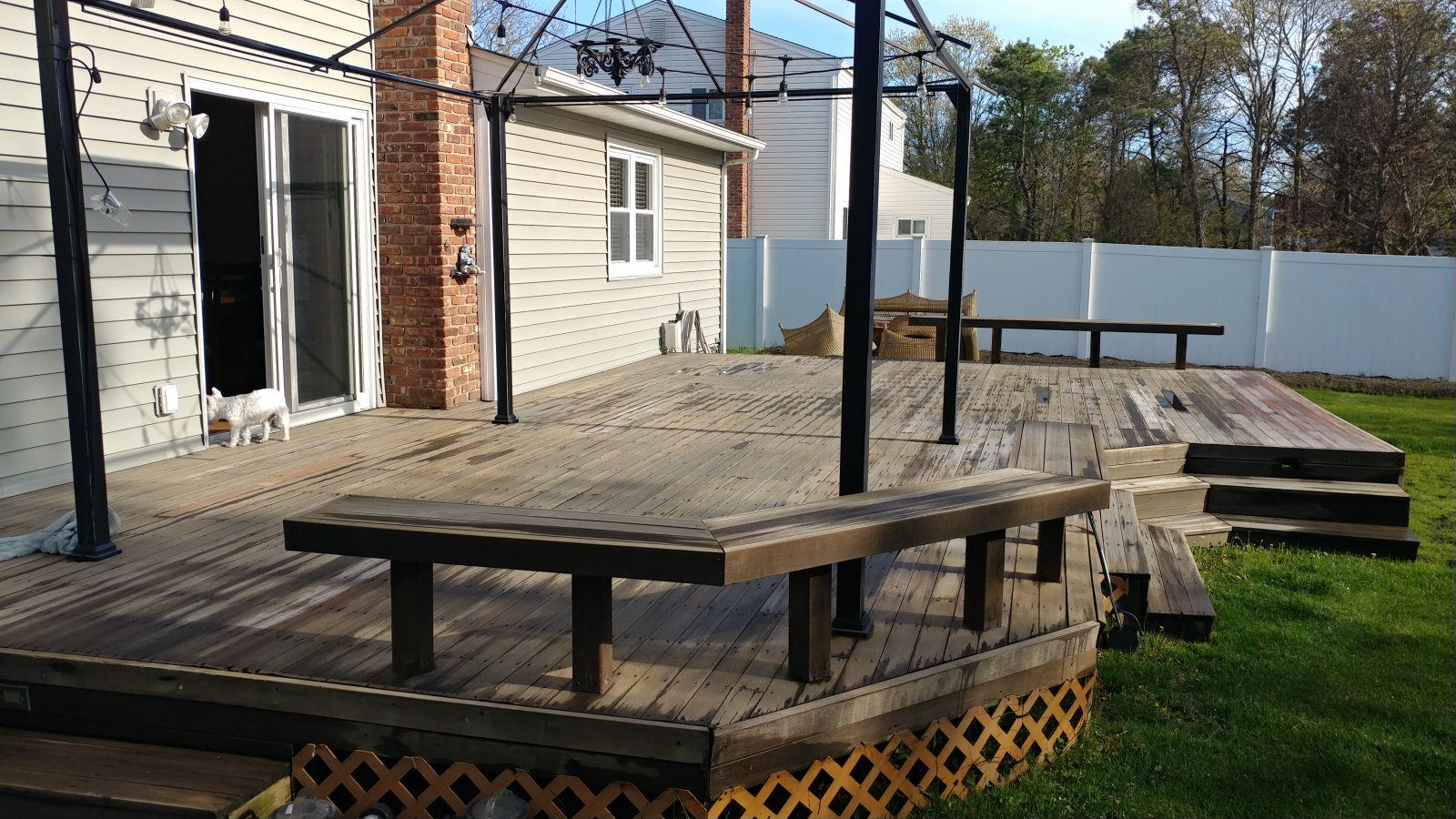
Unfinished wood on home exteriors — decks, fences, and siding — is particularly vulnerable due to constant exposure to the elements.
- Decks: Horizontal surfaces collect and hold water, especially in the spaces between deck boards. Stagnant moisture combined with organic matter like fallen leaves creates a fertile ground for mold to grow.
- Fences: Wooden fences in shaded or moist areas can retain dampness for extended periods. The lower sections in direct contact with soil are especially prone to mold due to soil moisture.
- House Siding: Water splash-back from the ground, direct rainfall, and high humidity can all moisten wood siding enough to support mold growth. Overhanging trees and bushes exacerbate this by keeping the siding damp and providing organic material for mold to feed on.
When to Clean vs. When to Replace Mold-Damaged Wood
Before starting the cleaning process, it’s worth confirming the wood is actually worth cleaning. Mold fungi grow on the wood surface and cause discoloration, but they do not damage wood cell walls or compromise structural integrity. Decay fungi — the kind that cause rot — are a different matter. If decay is present, cleaning won’t fix it.
A simple field test: press the tip of a flat-blade screwdriver firmly into the suspect wood at a 45-degree angle. Sound wood resists penetration and splinters in long fibers along the grain when probed. Decayed wood allows the tool to sink in easily and breaks in short, brittle chunks across the grain. This cross-grain crumbling pattern is a reliable indicator of structural decay.
- Surface mold only (discoloration, no softness): The wood is cleanable. Proceed with the steps below.
- Wood is soft or the screwdriver sinks easily: Structural decay is present. Cleaning won’t restore the wood’s integrity. Replace the affected boards before the project begins.
- Mold covers more than 10 square feet (roughly a 3 ft. by 3 ft. area): The EPA recommends professional remediation rather than DIY cleanup at this scale.
Safe and Effective Mold Removal Techniques
Once mold is spotted and the wood passes the probe test, it’s time to act. Here are the key steps to safely remove mold from unfinished wood without damaging the surface.
Precautions to Take Before Starting
Wear gloves, safety goggles, and an N95 mask before starting. Mold spores become airborne during scrubbing and sanding, so respiratory protection matters even outdoors. It’s also a good idea to seal off the affected area to prevent the spread of spores to adjacent surfaces.
Step-by-Step Mold Removal for Unfinished Wood
- Prepare the Cleaning Solution: Mix a solution of water and distilled white vinegar (equal parts) in a bucket. White vinegar has mild antifungal properties and is safe for most wood surfaces. Note that it works best on surface mold — it has limited ability to reach mold that has penetrated deeper into the wood fibers.
- Apply the Solution: Dip a soft-bristled brush into the vinegar solution and gently scrub the moldy areas. For stubborn mold spots, you may need to reapply and scrub multiple times.
- Wipe Off Excess Moisture: After scrubbing, use a clean, damp microfiber cloth to wipe away the solution and loose mold spores. The cloth should not be overly wet.
- Dry the Wood Thoroughly: Use a dry, soft cloth to remove lingering dampness. Allow the wood to air dry completely. Place it in direct sunlight or use a fan to speed up drying.
- Sand the Surface if Needed: If mold has left the surface rough or discolored, sand with 120–220 grit sandpaper before applying any finish. Sand until the surface is smooth and the appearance is consistent.
- Seal or Stain the Wood: See the section below on protecting the wood after mold removal.
Cleaning Solutions and Tools for Wood Mold Removal
 Selecting the right cleaning solutions and tools is needed to remove mold without damaging the surface. Here are the recommended options:
Cleaning Solutions
Distilled White Vinegar and Water: A non-toxic option with mild antifungal properties. Mix equal parts water and vinegar. Best suited for light surface mold. Because vinegar is roughly 95% water, thoroughly dry the wood afterward to avoid reintroducing the moisture mold needs to grow.
Baking Soda: A good choice for sensitive areas. Mix a quarter tablespoon of baking soda with water in a spray bottle, shake until dissolved, and spray onto the moldy surface.
Hydrogen Peroxide: Use 3% hydrogen peroxide applied directly to the mold. It kills surface mold through oxidation and decomposes into water and oxygen, leaving no toxic residue. However, hydrogen peroxide is an oxidizing bleach and can lighten or discolor wood, particularly cedar and redwood. Test in an inconspicuous area first. Allow a contact time of at least 10–15 minutes, keeping the surface wet for the full period.
Woodrich Brand Products: For commercial-grade results, Woodrich Brand offers products formulated specifically for mold removal and prevention on exterior wood.
- EFC-38 Wood Cleaner & Mild Stripper removes mold, mildew, and dead gray wood fibers by releasing the lignin that binds them to the surface — rather than just bleaching them in place. Mix approximately 2/3 cup per gallon of water, apply with a pump sprayer or brush, allow to dwell, then pressure wash. Safe for pets and plants when rinsed properly.
- HD-80 Heavy Duty Wood Stripper is the right choice when wood has multiple layers of old, failed finish that need to come off before restaining.
- After cleaning, follow up with Citralic Wood Brightener & Neutralizer to restore the wood’s pH before applying any finish.
Tools
- Soft-Bristled Brush: For scrubbing mold off the surface without scratching the wood. A toothbrush works for smaller, hard-to-reach areas.
- Spray Bottle: For easy application of liquid cleaning solutions on larger surfaces.
- Clean Cloths: One damp cloth for wiping, one dry cloth for drying the surface.
- Sanding Paper (Fine-Grit): Grits between 120 and 220 are generally suitable for unfinished wood.
- Gloves, Goggles, and N95 Mask: Essential PPE to protect yourself from mold spores during the removal process.
Sealing or Staining After Mold Removal
Once the wood is clean, dry, and brightened, applying a deep-penetrating oil-based stain is the most effective way to prevent mold from returning. Bare wood absorbs moisture, and moisture is what mold needs to grow.
Timber Oil Deep Penetrating Wood Stain fills the wood fibers so moisture cannot get in. Unlike film-forming stains that sit on the surface and eventually crack, Timber Oil penetrates into the wood and is guaranteed not to crack or peel. It also contains antifungal agents tested against more than 250 known sources of mold and mildew.
Before staining, make sure the wood has dried fully after brightening — moisture content should be below 12% for best results, which typically means at least 24–48 hours of dry weather after the brightening step.
Preventing Mold from Returning on Untreated Wood
Regular Inspections and Prompt Repair
- Inspect Regularly: Check your outdoor wood structures regularly for mold or signs of moisture accumulation. Early detection prevents mold from spreading.
- Repair and Replace: Fix leaks, cracks, or loose joints that allow water to penetrate. Replace severely damaged or rotten wood promptly.
Optimize Environmental Conditions
- Improve Air Circulation: Well-ventilated wood structures dry out faster, giving mold less opportunity to establish.
- Trim Vegetation: Keep bushes, trees, and plants trimmed back from wooden surfaces. Overgrown vegetation retains moisture and keeps wood damp.
- Sunlight Exposure: Position wooden structures to receive ample direct sunlight. Mold thrives in dark, damp conditions.
Protective Treatments and Finishes
- Use a Penetrating Wood Stain or Sealant: Products that penetrate the wood fibers, rather than sitting on the surface, provide lasting moisture resistance without the cracking and peeling that create entry points for mold.
- Reapply as Needed: Follow the product’s specific recommendations for reapplication frequency.
Keep Wood Dry and Clean
- Promptly Remove Standing Water: After rain, wipe down visible water on wood surfaces. Don’t allow water to stand and soak in.
- Regular Cleaning: Clean wood surfaces routinely to remove dirt, debris, and any early signs of mold. A gentle scrub with a soft brush and mild detergent can be effective for routine maintenance.
When to Call a Professional
Some mold situations are outside the range of DIY cleanup. Call a professional mold remediation service if:
- Mold covers more than 10 square feet (approximately a 3 ft. by 3 ft. area) — this is the EPA’s threshold for recommending professional involvement
- Mold keeps coming back after repeated cleaning — this usually means an underlying moisture problem hasn’t been resolved
- Mold is in structural wood such as load-bearing beams or joists
- You suspect mold is hidden inside walls or under the deck surface, particularly if there’s a persistent musty smell without visible growth
- Occupants have asthma, mold allergies, or compromised immune systems
Not sure which product is right for your wood, or whether you need the mild cleaner or the heavy-duty stripper? Text a photo of your project to the Project Support Hotline at (636) 288-8512 and the Woodrich team will tell you exactly what you need.