
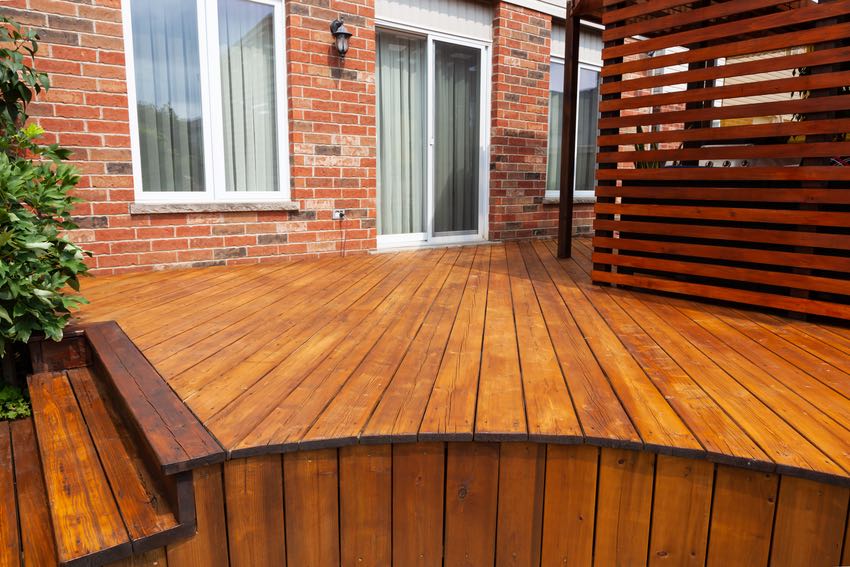
Choosing the right deck stain starts with one simple but crucial question: What type of wood is your deck made from? Hardwood and softwood decks both look beautiful but behave very differently when exposed to stain. Softwoods like cedar, redwood, and pressure-treated pine are naturally porous, allowing stain to penetrate deep into the fibers for lasting protection. Hardwoods such as Ipe, Garapa, and Teak, on the other hand, are incredibly dense and oily, which makes them more resistant to stain absorption.


Understanding these differences ensures you don’t just choose any stain, you choose the one that matches your wood type. The wrong product won’t penetrate properly and may sit unevenly on the surface, leaving your deck exposed to weathering, UV damage, and premature aging. In this guide, Woodrich Brand walks you through how hardwoods and softwoods interact with stain, why penetration matters, and which formulas, such as Timber Oil for softwoods and Hardwood Wiping Stain for exotics, will help protect and showcase your deck for years to come.
Table of Contents
ToggleWhat’s the difference between hardwood and softwood decking?
When choosing a deck stain, the first question you should ask is: Do I have hardwood or softwood? The answer makes a big difference in how the wood will interact with a stain.
Softwoods like cedar, redwood, and pressure-treated pine are common in residential decks because they are affordable, easy to work with, and widely available. These woods have more open cell structures, allowing stain to penetrate deeply.
Hardwoods, on the other hand, include exotic species such as Ipe, Garapa, and Teak. These woods are incredibly dense and durable, which makes them long-lasting but also more resistant to absorbing stain. Their natural oils further reduce absorption, requiring a different type of stain for effective protection.
Knowing whether your deck is built from hardwood or softwood sets the foundation for choosing the right product. The stain must match the wood’s structure—otherwise, it either won’t penetrate properly or it won’t provide lasting protection.
How does the Janka hardness scale affect stain choice?
The Janka hardness scale is the industry standard for measuring how hard a wood is. It determines how resistant the wood is to dents, scratches, and also how well it absorbs stain.
For example:
-
Cedar: ~350 lbf (very soft, absorbs stain easily)
-
Pressure-treated Pine: ~690 lbf (still absorbent, but stronger than cedar)
-
Redwood: ~450 lbf (similar to cedar in softness)
-
Ipe: ~3,510 lbf (extremely dense, almost no penetration)
-
Teak: ~1,000 lbf (dense and oily)
This scale shows why stain selection matters. A deep-penetrating oil-based stain is perfect for softwoods because it can soak in and saturate the fibers. For hardwoods, penetration is limited, so the stain must lock in protection at the surface.
When you understand where your decking lumber falls on the Janka scale, you can make a smarter choice that maximizes both beauty and longevity.
How much stain penetration can you expect in softwoods?
Softwoods like cedar and pine are naturally more porous. When you apply stain, these woods soak it in like a sponge. The depth of penetration depends on the wood’s age, dryness, and exposure to the elements.
Freshly cut or new boards may not absorb as deeply until they weather a bit, but aged and dry boards can pull stain down into the fibers quickly. On average, you can expect oil-based stain to penetrate several layers of wood fiber in softwoods.
That deep penetration is critical because it fills the cellular structure of the wood with protective oils. This prevents water from sneaking in and causing swelling, warping, or decay. It also helps carry transparent oxide pigments below the surface, giving UV protection that doesn’t flake or peel.
If you want your deck to stay protected for years, penetration is the key—and that’s why the right type of oil-based stain is so important for softwoods.
What makes Timber Oil ideal for cedar and pressure-treated pine?
Woodrich Brand Timber Oil was designed specifically for softwoods like cedar, redwood, and pressure-treated pine. These woods need a stain that can go deep, and Timber Oil does exactly that.
Instead of sitting on the surface like a film-forming finish, Timber Oil penetrates into the fibers and occupies all the available space. By filling that space, it leaves no room for water to enter. This deep saturation keeps the wood strong, flexible, and resistant to cracking.
Timber Oil is also tinted with transparent oxide pigments. These pigments are the same technology used in high-quality sunglass lenses, meaning they block UV rays without covering up the natural grain and detail of the wood. The finish looks rich and natural, not painted or artificial.
Maintenance is easy too. When it’s time for a refresh, you don’t have to strip Timber Oil. Just clean the surface, apply another coat, and the wood will drink it in. That’s why contractors and homeowners alike consider Timber Oil the gold standard for softwood decks.
Why do hardwoods like Ipe, Garapa, and Teak need a different stain?
Hardwoods are in a league of their own. Species like Ipe, Garapa, and Teak are so dense that they naturally resist moisture, insects, and rot. But this density also means they don’t absorb stain deeply.
If you try to use a softwood stain on a hardwood, you’ll notice most of it just sits on the surface and doesn’t soak in. Over time, that excess stain can turn sticky or shiny, and it may even wear unevenly.
That’s why hardwoods need a stain formulated to work with their structure. Instead of relying only on penetration, the stain should provide surface-level protection that bonds tightly and enhances the wood’s natural durability.
The right hardwood stain will highlight the unique beauty of these woods while giving them extra defense against UV rays and weathering. Without it, even dense hardwoods will eventually turn gray and lose their luster.
How does Hardwood Wiping Stain protect dense hardwoods?
Woodrich Brand Hardwood Wiping Stain was designed to solve the challenges of staining exotic hardwoods. Its formula contains 50% Long Oil Alkyd resin, which bonds at the surface to lock in protection where penetration is limited.
Here’s how it works:
-
The resin forms a breathable shield on the wood’s surface.
-
The oil base penetrates just enough to enrich the grain and bring out the wood’s color.
-
Any excess should be wiped off after application to leave the surface damp but not shiny.
This balance ensures the stain enhances the natural look without leaving a sticky film. It also provides excellent UV protection and moisture resistance, keeping hardwood decks vibrant and strong for years.
For Ipe, Garapa, Teak, or other dense hardwoods, Hardwood Wiping Stain is the professional choice. It respects the unique structure of these woods while delivering the protection they need.
Which Woodrich Brand stain is right for your project?
Choosing the best stain really comes down to the type of wood you have:
-
Softwoods (Cedar, Redwood, Pressure-Treated Pine): Use Timber Oil for deep penetration and long-lasting moisture protection.
-
Hardwoods (Ipe, Garapa, Teak, Mahogany): Use Hardwood Wiping Stain with Long Oil Alkyd resin to lock in surface protection.
Both stains are oil-based, transparent, and designed to highlight the natural grain of your deck. They never crack, peel, or leave lap marks when applied correctly. Instead, they provide a natural, durable finish that makes maintenance simple.
Whether your deck is a backyard cedar platform or a high-end Ipe showpiece, Woodrich Brand has the right stain to protect your investment and bring out its natural beauty.
- Written by: Russell Cissell
- Revised by: Mary Cissell