
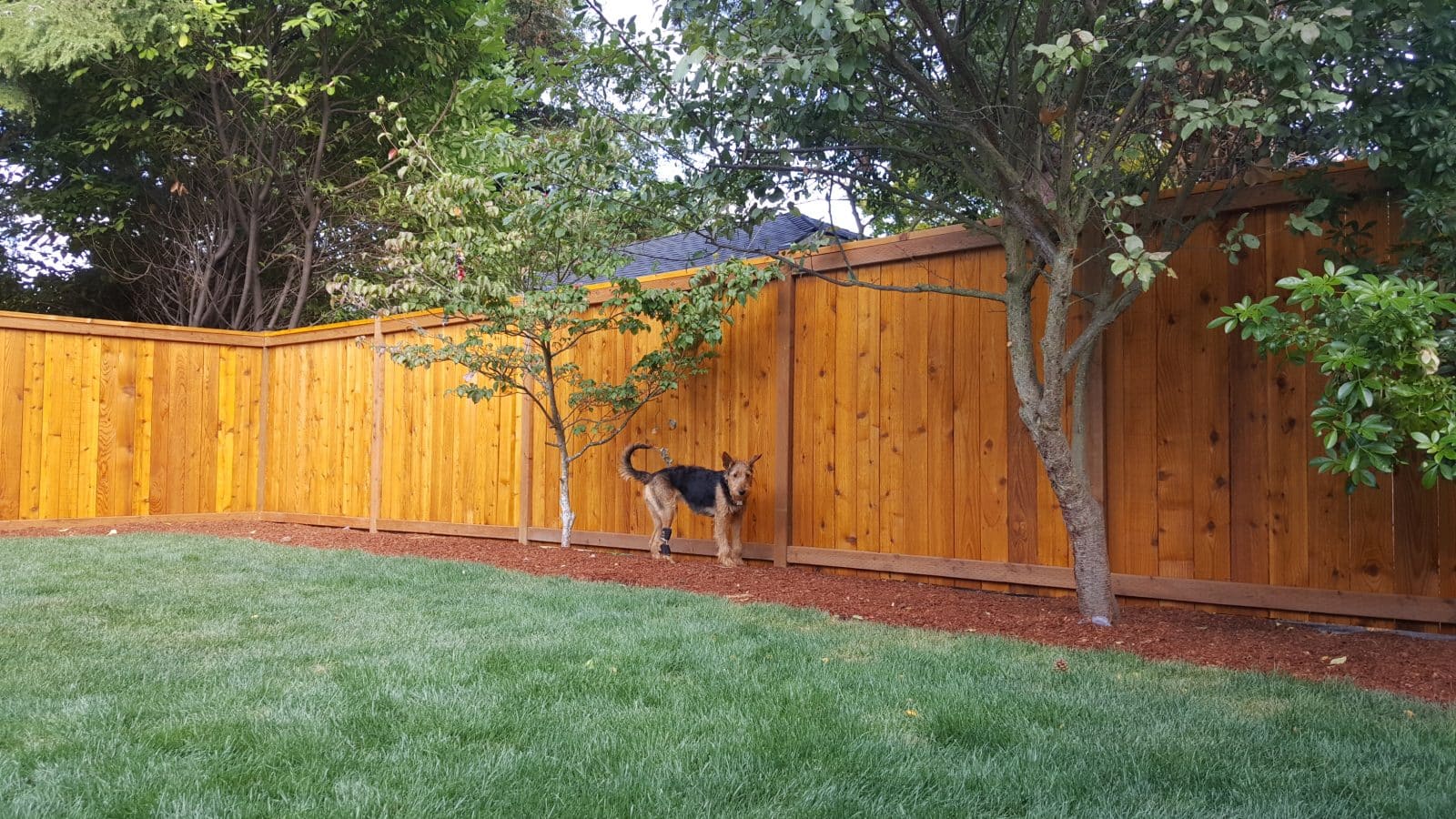
Fence stain is the key to protecting your investment while keeping the natural beauty of your wood visible. The right stain extends the life of your fence, prevents damage from the elements, and keeps maintenance simple. This guide answers the most common questions homeowners ask about fence stain and seal products.
Table of Contents
ToggleWhich Fence Stain is Best
The best fence stain is a deep-penetrating oil-based sealer. For cedar and pressure-treated wood, Woodrich Brand Timber Oil is the top choice. Contractors and builders agree on three reasons that set it apart:
1. Longevity
Unlike water-based stains that form a surface film, Timber Oil penetrates deep into the fibers of the wood. This eliminates the risk of cracking or peeling and ensures the finish weathers naturally over time.
2. Easy Maintenance
When the finish begins to look dry, you don’t need to strip or sand. Simply reapply the same color or use a clear coat to refresh the pigments that remain in the wood. This saves time and money compared to products that require full removal before recoating.
3. Natural Appearance
Timber Oil is tinted with transparent oxide pigments. These pigments highlight the wood grain instead of covering it up, so your fence maintains a natural, rich look. Contractors prefer this approach because it avoids the muddy appearance common with clay-pigmented stains.
Because it penetrates deeply and protects from the inside out, Timber Oil has been rated the number one choice for new fences. It delivers professional results that last, even when applied by first-time homeowners.
Choosing a Fence Stain Color
Selecting the right color comes down to balancing UV protection with the look you want for your fence. Most homeowners prefer stains that highlight the natural grain rather than hiding it. Timber Oil makes this possible by using ultra-fine transparent oxide pigments, the same type used in quality sunglass lenses. These pigments provide lasting UV protection while keeping the wood’s detail visible.
Among the stock colors, two are the most popular:
-
Brown Sugar – a warm, natural tone that looks best on pressure-treated pine.
-
Amaretto – a rich shade that pairs beautifully with cedar.
Other available shades let you fine-tune the appearance, and because the pigments are transparent, they can be blended for custom tones.
The best way to decide is to order a sample color kit. Applying test swatches to your own fence boards allows you to see exactly how each color looks in your light conditions. The appearance of any stain will vary depending on the wood species and its age, so samples provide a true preview before you commit to larger quantities.
Choosing the right color not only improves the look of your fence but also ensures your investment is protected with lasting UV defense.
How Much Fence Stain Do I Need?
Knowing how much stain to buy is an important step in planning your project. If you purchase too little, you risk inconsistent coverage. Buying too much leaves you with expensive leftovers that may not store well.
As a general rule:
-
1 gallon covers about 150 square feet of fence surface.
-
A 5-gallon pail covers about 125 linear feet of 6-foot privacy fence on one side.
The actual coverage rate can vary depending on the age and texture of the wood. Rough-sawn lumber and older fences that have weathered will absorb more stain than new, smooth boards. End grains and exposed cut edges also take in additional stain, so it’s smart to plan for a bit of extra product.
To estimate your needs, measure the length and height of your fence and calculate the total square footage. Divide that number by 150 to determine the number of gallons required. For example, a 300-foot-long 6-foot privacy fence has about 1,800 square feet of surface area if staining both sides. That job will require about 12 gallons of Timber Oil.
Proper planning ensures full coverage and a uniform finish, which means your fence will be better protected and look more professional.
How to Spray Fence Stain
Spraying is the most efficient way to apply stain to a fence. It saves time, reduces labor, and ensures even coverage. With the right technique, it is easier than brushing or rolling.
Best tools for spraying fence stain:
-
HVLP sprayers (high-volume, low-pressure) – provide consistent flow with minimal overspray.
-
Pump-up garden sprayers – affordable and effective for smaller fences or touch-ups.
-
Airless sprayers – work well when set to low pressure and high volume.
The goal when spraying Timber Oil is to apply it heavy enough so the wood absorbs as much as it can. Spray with smooth, overlapping passes, keeping the nozzle about 6–8 inches from the surface. Work from the top of each board downward to avoid drips.
For fences, back-brushing is rarely necessary. Timber Oil penetrates deeply on its own, so you can let the stain soak in and wipe only if puddles remain. This makes spraying especially efficient for large fences where hand application would be too time-consuming.
With the right setup, you can cover a standard backyard fence in just a fraction of the time it would take with a brush, and the results will be long-lasting.
How Long Does Fence Stain Last?
The lifespan of a fence stain depends on the product used, the exposure of the fence, and how well it is maintained. With Timber Oil, you can expect years of reliable protection before it needs another application.
As Timber Oil ages, the wood fibers slowly oxidize. You may notice that water lingers longer on the surface after rain, or that the fence looks drier than before. These are signs the stain is ready for a maintenance coat.
Reapplication is straightforward. You can use the same Timber Oil color without stripping, or apply Clear Advantage to rejuvenate the pigments already in the wood. Because Timber Oil never forms a surface film, you’ll never deal with cracking or peeling.
Fences that face direct sun may need reapplication every three to four years. Fences in shaded areas last even longer between coats. By following this simple maintenance schedule, your fence will stay protected and looking its best for decades.
FAQ
Can fence stain be applied with a sprayer?
Yes. A pump-up garden sprayer or HVLP sprayer works well. Use a fan tip for best coverage.
Do I need to apply a separate sealer after staining?
No. Timber Oil is a stain-and-sealer in one. It penetrates deep and protects against moisture and UV rays.
Which fence stain lasts the longest?
Oil-based penetrating stains last longer than water-based or film-forming finishes. Timber Oil will never crack or peel, making maintenance easy.
How do I choose the right color?
Order a sample kit. Test the five stock colors on your own fence boards in natural light to see how they look before buying in bulk.
Can I mix Timber Oil colors?
Yes. The transparent oxide pigments blend easily, so you can customize a shade to match your house or landscape.
- Written by: Mary Cissell
- Revised by: Russell Cissell