
Choosing the right exterior wood finish is one of the most important decisions when building or maintaining a deck, fence, or log structure. An oil based exterior stain not only enhances the appearance of wood, but also plays a critical role in protecting it from moisture, UV damage, and long-term deterioration.
With so many products on the market, understanding how different oil-based stains perform can make the difference between a finish that lasts for years and one that fails prematurely. This guide explains why oil based exterior stains outperform many alternatives and breaks down the three main types used for exterior wood protection.
Why Choose an Oil Based Exterior Stain?
One of the most common questions homeowners ask is whether water-based or oil-based stains offer better protection. While both have their place, oil based exterior stains consistently deliver superior long-term performance—especially in high-traffic or weather-exposed areas like decks.
Oil-based stains penetrate deeper into wood fibers, condition the wood from within, and wear gradually over time rather than peeling or flaking.
Advantages of Oil-Based Stains
Oil based exterior stains offer several key benefits:
- Deeper penetration into wood fibers
- Better moisture resistance
- Gradual wear by erosion instead of peeling
- More natural appearance that enhances wood grain
- Improved color retention over time
Because oil-based stains have been used successfully for decades, they remain the preferred choice for professionals who prioritize durability and ease of maintenance.
Weather and Maintenance Benefits
Oil based exterior stains naturally repel water while allowing wood to breathe. This helps prevent common issues such as cracking, warping, splitting, mold growth, and rot.
Maintenance is also simpler. When an oil-based stain begins to fade, most surfaces only require a light wash and recoat. Full stripping is typically needed only after several years of maintenance coats.
Environmental Considerations
A common misconception is that oil based stains are not environmentally friendly. Many modern oil based exterior stains are formulated with low VOC levels and meet compliance standards in most states.
Oil-Based vs. Water-Based Exterior Stains
Water-based finishes generally do not penetrate deeply into exterior wood. Instead, they tend to form a surface coating that wears differently over time.
Common drawbacks of water-based stains include:
- Increased risk of peeling
- Blotchy appearance during reapplication
- More difficult stripping and maintenance
For exterior projects where longevity and natural appearance matter, oil based exterior stains typically outperform water-based alternatives.
Beware of Water-Reducible Alkyd Stains
Water-reducible alkyd stains are often mistaken for true oil-based finishes. These products do not penetrate wood effectively and tend to form a surface film.
As a result, they are prone to:
- Cracking and peeling
- Poor color saturation
- Visible lap marks
- Difficult reapplication requiring full stripping
Despite often being more expensive, these stains generally underperform compared to high-quality natural oil-based finishes.
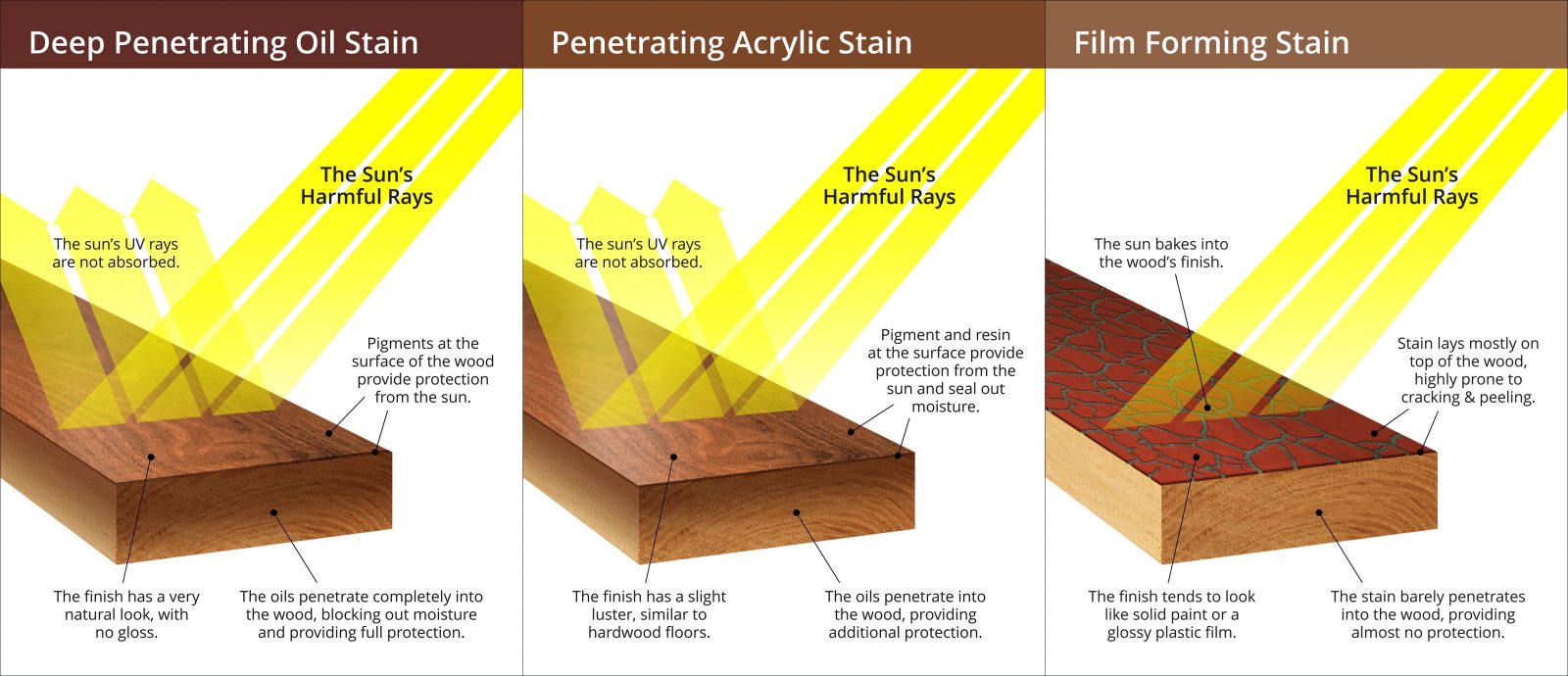
The 3 Types of Oil Based Exterior Stains and Sealers
Understanding the differences between oil-based stain types is essential when choosing the best product for your project.

Film Forming Oil-Based Stains
Film forming stains create a paint-like layer on the wood surface. While they may look appealing initially, they frequently fail over time.
Common issues include:
- Cracking and peeling as the finish ages
- Visible traffic patterns
- Moisture being trapped beneath the surface
- Accelerated wood rot
Because wood needs to breathe, film forming finishes often cause long-term damage—especially on decks and log structures.
Deep Penetrating Oil Based Stains
Deep penetrating oil based exterior stains absorb into the wood rather than sitting on the surface. This allows the wood to expand and contract naturally without damaging the finish.
Woodrich Brand Timber Oil is a deep penetrating oil-based stain designed for:
- New construction
- Pressure treated wood
- Decks, fences, siding, and log cabins
These stains provide a natural appearance, are easy to apply (even by spraying), and never peel or flake—only fading gradually over time.

Protection and Maintenance Benefits
Deep penetrating oil based stains offer:
- Excellent UV protection
- Moisture-wicking properties
- Replenishment of dry or weathered wood
- Simple maintenance with wash-and-recoat applications
They are ideal for homeowners seeking durability without complex upkeep.
Penetrating Acrylic Oil-Based Stains
Penetrating acrylic oil based stains combine deep penetration with high pigment content. They are especially effective on dense and exotic hardwoods where penetration is typically limited.
These stains are commonly used on:
- Ipe
- Teak
- Cambara
- Garapa
- Other exotic hardwood species
They provide rich color, strong weather resistance, and fade naturally without peeling or cracking.

Choosing the Right Oil Based Exterior Stain
When selecting an oil based exterior stain, consider:
- Wood type (softwood vs. hardwood)
- Exposure to sunlight and moisture
- Desired appearance and maintenance level
For most exterior applications, penetrating oil-based stains outperform film forming alternatives in both longevity and ease of care.
Durability and Weather Resistance
The oils penetrate the wood to replenish it while occupying available space, forming a new layer of protection at the wood’s surface without creating a barrier on top. It does not crack or peel – it just fades into the wood, similar to deep penetrating wood stains. Resin solids and transparent oxide pigments make it durable enough for even the harshest of outdoor weather.
When choosing an exterior stain type, it is not difficult to see which options rise above the rest. If you want your wood to look more natural, be easier to apply and maintain and want it to last longer, why would you not choose a penetrating oil based stain? It is all about the finish.
If your goal is a natural appearance, easier maintenance, and long-term protection, a penetrating oil based exterior stain is the clear choice. Understanding the differences between stain types ensures your wood surfaces stay protected and beautiful for years to come.
FAQs – Oil Based Exterior Stain
What is an oil based exterior stain?
An oil based exterior stain is a wood finish that penetrates into wood fibers, providing moisture resistance, UV protection, and long-lasting durability without forming a surface film.
Are oil based exterior stains better than water-based stains?
In most exterior applications, yes. Oil based stains penetrate deeper, wear more naturally, and are easier to maintain over time compared to water-based finishes.
Do oil based stains peel or crack?
High-quality penetrating oil based stains do not peel or crack. They fade gradually, making reapplication simple without stripping.
What is the best oil based stain for decks?
A deep penetrating oil based exterior stain is typically the best option for decks because it allows the wood to breathe and handles foot traffic more effectively.
How often should oil based exterior stains be reapplied?
Reapplication intervals depend on exposure and usage, but oil based stains generally require less frequent maintenance than surface-forming finishes.
Can oil based stains be used on pressure treated wood?
Yes. Penetrating oil based stains are well suited for pressure treated wood because they absorb deeply despite higher moisture content.
- Written by: Mary Cissell
- Revised By: Russell Cissell