
Protecting your deck shouldn’t come at the expense of the environment. Modern eco-friendly stains and sealers allow homeowners to safeguard their wood surfaces while minimizing harmful emissions and chemical runoff. But with so many “green” options on the market, how can you tell which ones actually deliver lasting protection and true environmental responsibility?
In this guide, Woodrich Brand explains what makes a sealer eco-friendly, how natural oil formulations protect wood fibers, and which sustainable options provide the best balance between performance and planet-conscious care.
What Makes a Sealer Eco-Friendly?
An eco-friendly sealer is formulated to protect wood without releasing high levels of volatile organic compounds (VOCs) or using harsh chemical solvents. Traditional sealers often rely on synthetic coatings that trap moisture and degrade air quality over time.
Eco-friendly options are designed with:
- Low-VOC formulas that meet EPA standards and minimize emissions.
- Modified natural oils derived from renewable sources for deep nourishment.
- Biodegradable additives that break down naturally without harming waterways.
- Minimal, recyclable packaging to further reduce environmental impact.
Choosing a low-impact sealer helps maintain a healthier environment both around your home and beyond—without sacrificing wood durability or appearance.
How Do Eco-Friendly Sealers Protect Wood Compared to Traditional Sealers?
Eco-friendly sealers function much like conventional products but use safer ingredients. The key difference lies in how they penetrate and protect the wood.
Instead of forming a surface film, natural oil-based sealers soak into the wood fibers, nourishing them from within. This process enhances the wood’s resistance to water, UV rays, and mildew.
Film-forming synthetic sealers, by contrast, sit on top of the surface and often peel or crack as the wood expands and contracts. Natural oil-based sealers breathe with the wood, offering flexible, long-lasting protection.
The result is a durable, breathable finish that enhances texture and grain without trapping moisture or releasing harsh fumes.
What Are the Key Ingredients to Look for in an Eco-Friendly Sealer?
When shopping for an environmentally responsible deck treatment, look for ingredients that combine natural protection with proven performance.
Choose sealers or stains that contain:
- Modified plant-based oils such as linseed or soybean derivatives for deep penetration.
- Natural resins that bond to fibers and resist water.
- Transparent oxide pigments for UV protection while preserving wood’s natural tone.
- ·Low-VOC solvents that evaporate cleanly without harmful emissions.
Avoid coatings that rely heavily on synthetic polymers, heavy metals, or petroleum-based solvents, as these reduce breathability and may contribute to environmental pollution.
Can Eco-Friendly Sealers Perform as Well as Conventional Products?
Absolutely. Today’s low-VOC, oil-based sealers match or exceed the performance of older synthetic alternatives. Modern chemistry allows natural formulations to penetrate deeply and protect against weathering, UV rays, and moisture.
Oil-based stains and sealers made with renewable, modified natural oils create a water-repellent barrier that prevents swelling, cracking, and warping. Because they bond within the wood instead of sitting on the surface, maintenance is simple—just clean, brighten, and recoat as needed. Light sanding may be required if the surface is rough or splintered.
The key is selecting a professional-grade product formulated specifically for exterior wood use.
Why Woodrich Brand Sealers Are a Sustainable Choice
At Woodrich Brand, sustainability is built into every formula. Our low-VOC, oil-based stains protect your deck and the environment at the same time.
Here’s how Woodrich Brand products support eco-friendly performance:
- Natural Oil Penetration: Timber Oil and Hardwood Wiping Stain use renewable, modified oils that nourish wood from within.
- Minimal Maintenance: Reapplication doesn’t require stripping—just clean, brighten, and recoat. This reduces waste and chemical runoff.
- Balanced Restoration: Citralic Brightener/Neutralizer restores natural color and balances wood pH after cleaning, ensuring proper stain absorption.
- Long-Lasting Protection: Transparent oxide pigments derived from stable, non-toxic minerals protect against UV damage without synthetic dyes.
By choosing Woodrich Brand, you’re not only preserving your deck—you’re supporting a cleaner, more sustainable approach to outdoor wood care.
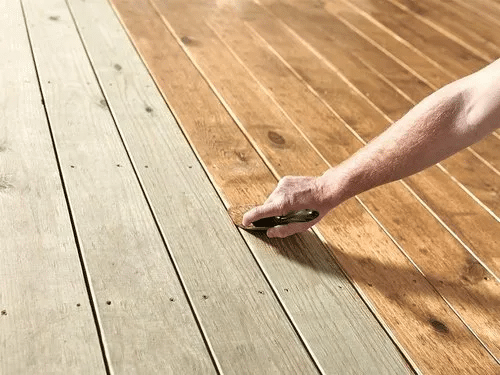
Which Eco-Friendly Sealer Is Best for Your Wood Deck?
The right choice depends on your wood type and environmental exposure.
- For softwoods (cedar, redwood, pressure-treated pine): Use Woodrich Timber Oil, a low-VOC, deep-penetrating formula ideal for porous woods. It requires no back-brushing unless puddles appear.
- For hardwoods (ipe, garapa, teak): Use Woodrich Hardwood Wiping Stain, a low-VOC, surface-bonding formula for dense exotic woods. Wipe off excess after absorption for a smooth, uniform finish.
Both products deliver professional-grade protection using environmentally responsible formulas that bring out natural beauty while preserving integrity for years to come.
Protect Your Deck and the Planet
You don’t have to choose between beauty, durability, and sustainability. With Woodrich Brand’s eco-friendly stains and sealers, you can achieve all three.
Explore our full line of low-VOC, natural oil-based products designed to enhance, protect, and preserve your outdoor wood surfaces—without harming the environment.
FAQ
Q1: Are oil-based deck stains eco-friendly?
Yes. Modern low-VOC oil-based stains, such as Woodrich Timber Oil, use modified natural oils that minimize emissions while delivering superior protection.
Q2: How often should I reapply an eco-friendly sealer?
Most decks need reapplication every 2–3 years, depending on sun exposure, weather, and wood type. Maintenance coats require only cleaning and brightening.
Q3: Do eco-friendly sealers protect against UV damage?
Yes. Quality eco-friendly products use transparent oxide pigments that block UV rays while maintaining the natural look of wood.
Q4: Can eco-friendly sealers be applied over old coatings?
No. Always strip or clean off previous finishes first. Use Woodrich HD-80 or EFC-38 before applying a new eco-friendly oil-based stain.
Q5: What is the difference between Woodrich Timber Oil and Hardwood Wiping Stain?
Timber Oil penetrates softwoods deeply for long-lasting protection, while Hardwood Wiping Stain bonds to dense hardwoods like ipe and garapa, requiring excess to be wiped after absorption.
- Written by: Russell Cissell
- Revised by: Mary Cissell