
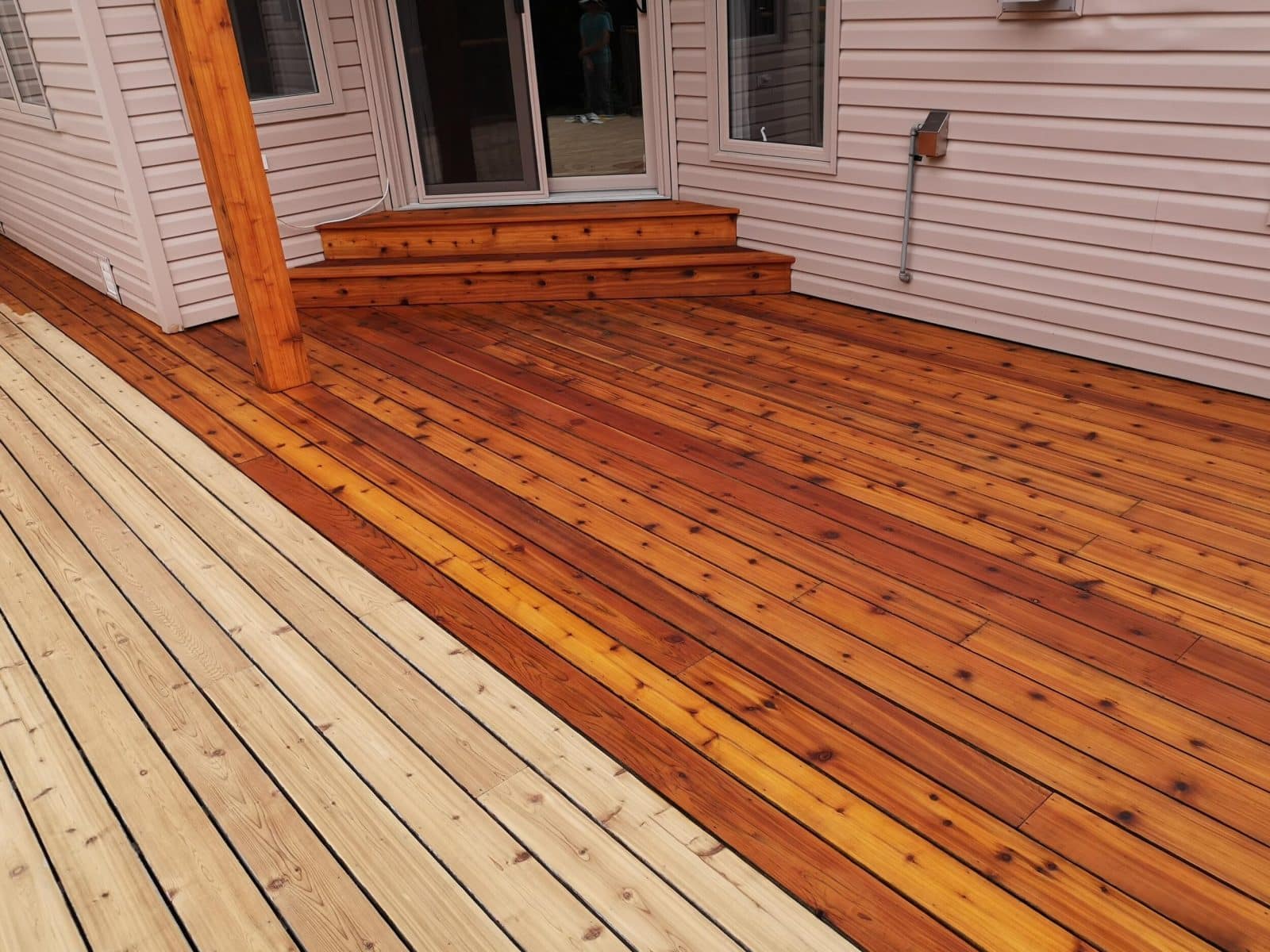
It’s better to stain an exterior deck than it is to paint for a few simple reasons. First, exterior wood is going to go through many cycles of expanding and contracting as the outside temperature warms and cools. This will make paint crack and peel. Next, exterior wood needs to “breathe” and properly formulated exterior wood stains allow for permeability which means they can’t trap moisture inside your wood and cause rot like a film forming paint will. Finally paint is extremely difficult to remove which means when you run into problems with the finish there is a labor intensive and costly path back to refinishing.
Table of Contents
ToggleThe Basics: Paint or Stain Deck?
To even begin with durability, you must first grasp how paint and stain function.
Paint produces a surface coating that fully covers the wood. It conceals texture and grain and provides a smooth appearance. It also creates a heavy coating that rests on the surface of the boards.
Stain, however, seeps into the wood. It brings out natural grain and is available in several opacities, transparent, semi-transparent, and solid. Semi-transparent stain allows some grain to be visible through it. Solid stain appears more like paint but nonetheless penetrates into wood.
So when you consider deck paint vs stain, you’re essentially weighing surface coverage against absorption.
Which One Lasts Longer?
Paint longer, but at greater risk.
Overall, a well-applied deck paint job will last 5 to 10 years. Solid deck stains generally last 3 to 5 years, and semi-transparent stains 2 to 3 years before they need to be reapplied.
But there’s an exception. While paint might last longer on paper, it also peels, chips, and cracks as it weather. When that occurs, refinishing is a greater effort involving scraping, sanding, and priming before repainting.
Stain fades more subtly and wears out over time. You can re-clean the surface and re-stain without much preparation, particularly if you’re using the same type of product.
Pros and Cons: Deck Paint vs Stain
Here’s a quick summary:
1. Paint
Pros
- Color retention lasts longer
- Wider color options
- Strong protection against UV damage
Cons
- Peels and chips
- Needs primer
- Conceals wood grain
- Traps moisture if not applied properly
2. Stain
Pros
- Penetrates the wood,no peeling
- Easy to apply and reapply
- Highlights wood texture
- Less slippery when wet
Cons
- Shorter lifespan (semi-transparent in particular)
- Fewer color choices
- Requires re-staining every few years
When choosing between paint or stain for your deck, think long term. Paint may last longer initially, but stain is easier to maintain and renew.
Semi-Transparent vs. Solid Stain
When it comes to deck stain versus paint, semi-transparent vs solid stains offer different performance and aesthetic results.
Semi-Transparent Stain
- Shows wood grain
- Looks more natural
- Wears down gradually
- Requires more frequent reapplication
- Ideal for new wood or natural-style decks
Solid Stain
- Hides most of the grain
- Looks similar to paint
- Offers stronger UV protection
- Lasts longer than semi-transparent
- Easier to touch up than paint
Woodrich Brand’s semi-transparent stains offer deep penetration and even fading, so you can freshen up the surface without stripping old layers. If you want wood that looks authentic while staying protected, it’s a better choice than both paint and solid stain in many cases.
Paint vs Stain Deck Maintenance
Paint requires more surface prep. You need to clean, sand, and prime the deck before applying paint. Over time, you’ll likely need to scrape off peeling areas before repainting.
Stain is more forgiving. With stains, you clean the surface, let it dry, and reapply. No peeling, no heavy sanding. That’s why so many professionals and DIYers prefer stain for long-term upkeep.
Slip Resistance: Another Consideration
Painted decks can become slippery when wet,especially if the paint is glossy or worn smooth. You’ll need to add anti-slip grit to the paint or choose a specialty deck paint with texture built in.
Stain, particularly semi-transparent stain, maintains the wood’s natural traction. It’s a safer bet for pool decks, stairs, or high-traffic areas where slipping is a concern.
Application Time and Weather Impact
Stains go on faster and easier. You don’t need a primer, and most stains are applied in a single coat. You can even spray them for large decks. Paint, by contrast, takes more time and often needs multiple coats plus a primer layer.
Stain is also less likely to trap moisture underneath. That’s important in wet or humid climates. Trapped moisture under paint can lead to blistering and wood rot.
Environmental and Wood Condition Factors
Certain conditions favor stain over paint:
- Old wood with cracks or splits handles stain better—paint highlights flaws
- Moist climates benefit from stain’s breathability
- High-sun areas need UV protection—solid stain or light-colored paint help
In dry climates, where UV damage is a bigger issue than moisture, paint might last longer—if applied properly. In wetter zones, stain performs better over time.
So, What Should You Choose?
If you want:
- Longer wear but more upkeep → Paint
- Easier maintenance and natural look → Semi-transparent stain
- Solid color without peeling → Solid stain
- Professional-grade results → Use Woodrich Brand for any stain type
Your choice depends on your priorities. Maintenance effort, wood condition, climate, and look all factor in.
FAQs
Q: Does deck paint or stain last longer?
Paint can last up to 10 years, while stain lasts 2 to 5 years. But paint also peels and cracks, which can be harder to fix. Stain wears down and is easier to refresh.
Q: Is solid stain better than paint?
Solid stain gives similar coverage to paint but is less likely to peel. It’s a good middle ground if you want color and easier maintenance.
Q: Can I stain over a painted deck?
No. You’ll need to strip the paint completely before applying stain. Paint blocks stain from soaking into the wood.
Q: Which is better: semi-transparent vs solid stain?
Semi-transparent stains show more wood grain and fade naturally. Solid stains hide more grain and last longer, but don’t peel like paint.
Q: What lasts longer: paint or stain on a deck?
Paint may technically last longer, but its failure is more dramatic (peeling). Stain fades evenly and is easier to reapply, so many homeowners prefer it in the long run.
Summary
Choosing between paint or stain for your deck isn’t just about color,it’s about how much work you want to put in later. Paint may last longer, but it peels and needs more prep. Stain wears gradually and is easier to maintain. For a balance of beauty and ease, Woodrich Brand semi-transparent and solid stains offer long-lasting protection with fewer headaches down the road.