
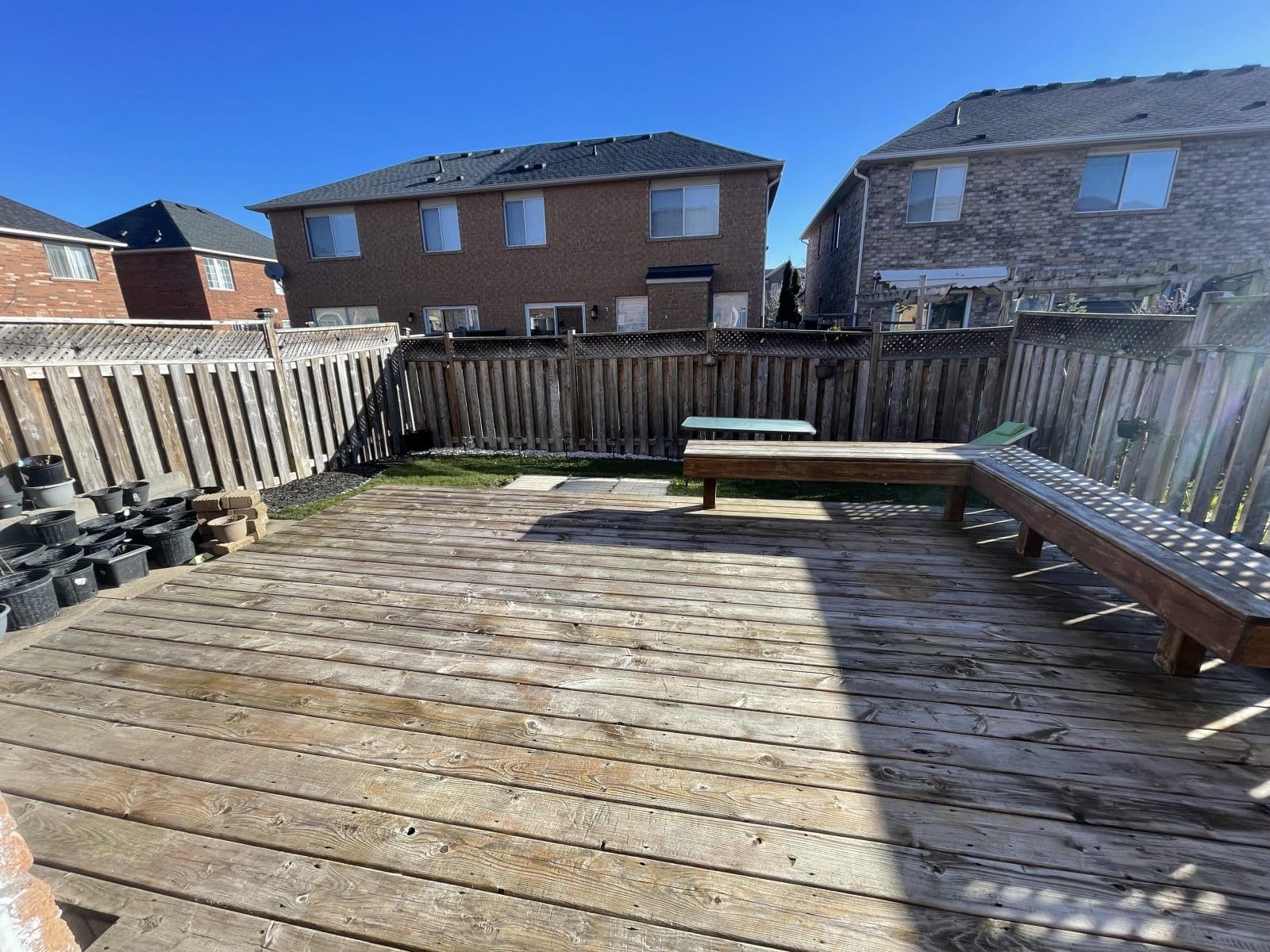
Mold doesn’t just look bad on your deck, fence, or siding. It can trap moisture, deteriorate the wood and destroy the finish. When you notice black spots, woolly growth or even slime covered in green color it is time to take action. Here’s how to remove mold from wood safely and prevent it from coming back.
Keep Pollen Off Your Wood
Pollen might appear to be harmless but it’s one of the leading causes of mold and mildew issues on exterior wood.
- The pollen provides food to the mold when it gets into the grain.
- It gets sticky when damp, holding moisture right against the surface.
- New wood may grow moldy. when pollen is left too long.
Hint: When wood has been left out where pollen collects on it for more than a few weeks, clean and brighten it before staining. This will stop mold and will help your finish absorb evenly.
Safely Eliminate Mold Using a Percarbonate-Based Cleaner
Most box store mold treatments contain Sodium Hypochlorite or chlorine bleach. Chlorine bleach is caustic, it destroys wood fibers and bleached all of the natural color from your wood. There is a safe and more practical approach.
- Use a percarbonate-based cleaner. It’s made from oxygen bleach, the same base as hydrogen peroxide.
- U.S. Forest Products Laboratory recommends this solution for exterior wood care.
- It foams up on contact with mold and mildew, loosening the growth safely.
- Much safer for both you and the wood. No toxic fumes. No permanent damage to the wood grain.
Use EFC-38 Cleaner and Mild Stripper to Remove Mold From Exterior Wood
Woodrich Brand EFC-38 product is more than just a cleaner. It’s a restoration-grade product that knocks out mold, mildew, gray wood fibers, and even aged semi-transparent finishes.
- How to use it: For every gallon of water use 8 oz (about 2/3 cup) of powder. Use pump-up garden sprayer. Allow to set approximately 15 minutes and perform a scratch test. When the wood wipes clean it is ready to rinse.
- Works on all types of wood: Cedar, pine, redwood, hardwoods, fences, decks, log homes, and siding.
- Final step Citralic Brightener: Rinse EFC-38 off, then apply Citralic Brightener to re-secure a fresh-cut appearance to the wood and to re-establish the pH balance.
Note: Don’t mix bleach with EFC-38. It’s not needed and could cause a dangerous reaction.
Tips for Removing Mold From a Wood Deck
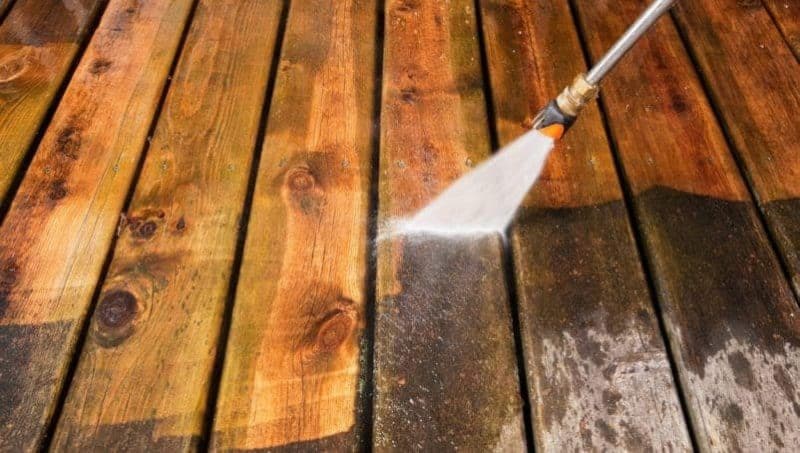
Decks are particularly prone to mold and algae and slippery growth.
- Slippery when wet: Be cautious walking on a moldy or wet deck.
- Give the cleaner time: Let EFC-38 dwell at least 15 minutes. Do a scratch test to make sure the surface is ready.
- Remove moss or lichens: In case of thick green deposits, knock off as much as you can before attacking with a cleaner.
- Operation of pressure washer: Put it on a soft fan tip. Allow the cleaner to work. Don’t blast the wood.
How to Remove Mold growth off a Wood Fence
The old, gray, run-down fences can be rejuvenated, too, with a little procedure.
- When possible work in the shade: Direct sunlight may cause the cleaner to dry out.
- Use a face shield: When soft-washing or pressure rinsing, blowback can carry debris and cleaner into your face.
- Same process as decks: Apply EFC-38, let dwell, do scratch test, rinse, then brighten.
Tips for Removing Mold From Wood Siding
Siding tends to retain dampness along the ground as well as shady places.
- Work from the bottom up: This prevents streaking and gives you better control.
- Mold must be expected in shady, tree-covered places: Under evergreen trees or in areas where pollinators are at work.
- Prevent return rinse: A few rinses with a garden hose can prevent the recurrence of mold.
FAQs
Q: Will bleach kill mold on wood?
No. It may cause temporary appearance of cleanliness on the surface, but it may harm the wood and leave a residue which further promotes mold growth. Use a percarbonate-based cleaner like EFC-38.
Q: Do I have to use a brightener after cleaning?
It is not always but it is strongly advised. The Citralic Brightener restores the natural color and helps your finish last longer.
Q: Are pets and plants safe?
EFC-38 is safer than bleach-based products. Spray off adjacent plant life with clean water and avoid having pets in the treated area until it is dry.
To get additional help or to locate the correct product to use in your work, go to woodrichbrand.com or call 636-288-8512.